Ontario cedar buying guide
Emerald Cedar vs Black Cedar vs White Cedar
All three can provide privacy in Ontario, but they create very different landscapes. Compare their shape, growth, mature size, spacing, maintenance, advantages, disadvantages, and price before choosing trees for your Toronto or GTA property.
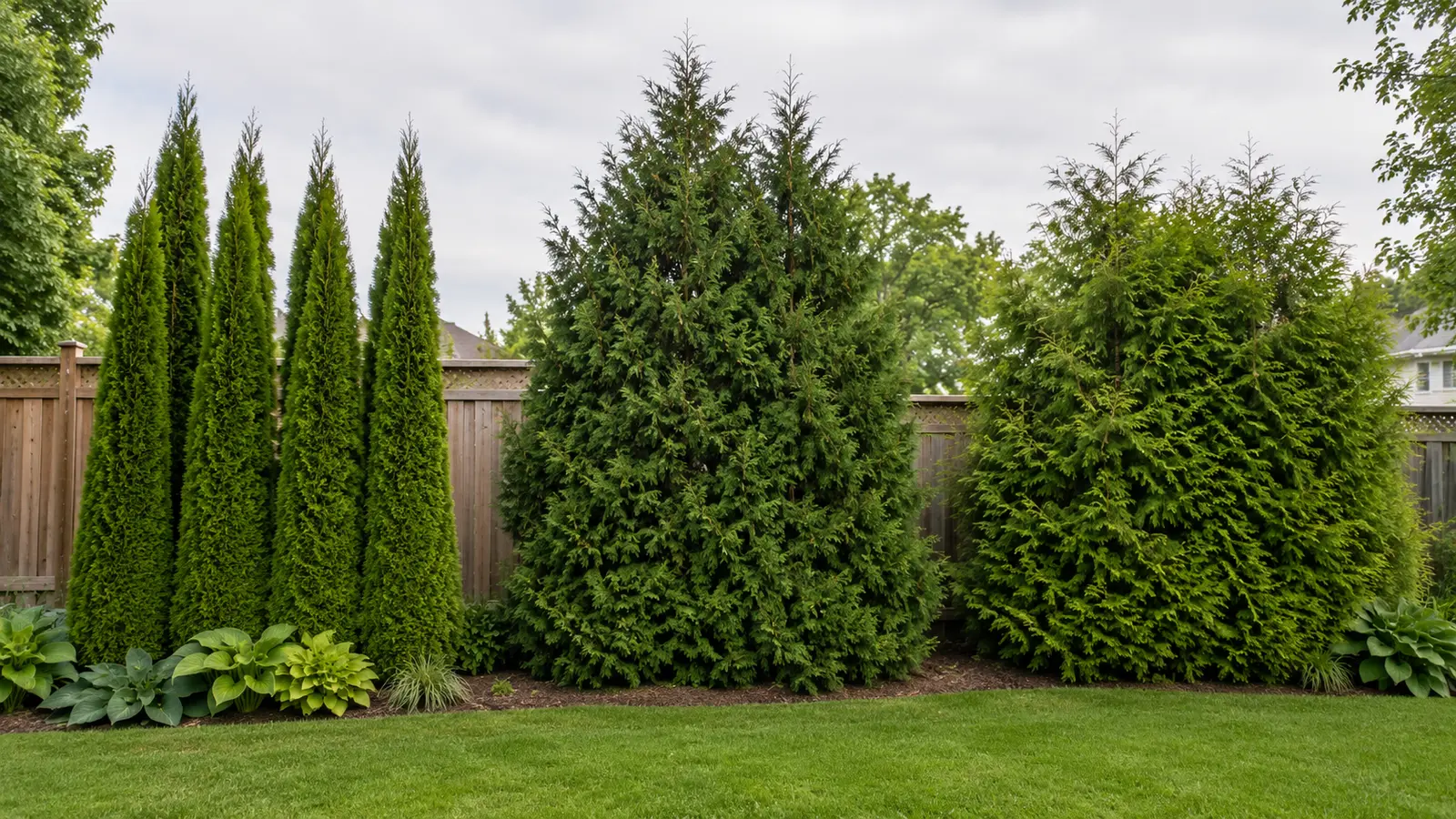
The quick answer
Which cedar should you choose?
Choose by mature width and desired appearance, not only by the height of the tree at the nursery. A cedar that fits on planting day may become too wide or too tall for the site later.
Emerald Cedar
Thuja occidentalis ‘Smaragd’
Best for narrow, formal Toronto yards
Black Cedar
Thuja occidentalis ‘Nigra’
Best for tall, dense privacy with more space
Eastern White Cedar
Thuja occidentalis
Best for a natural hedge and larger landscape
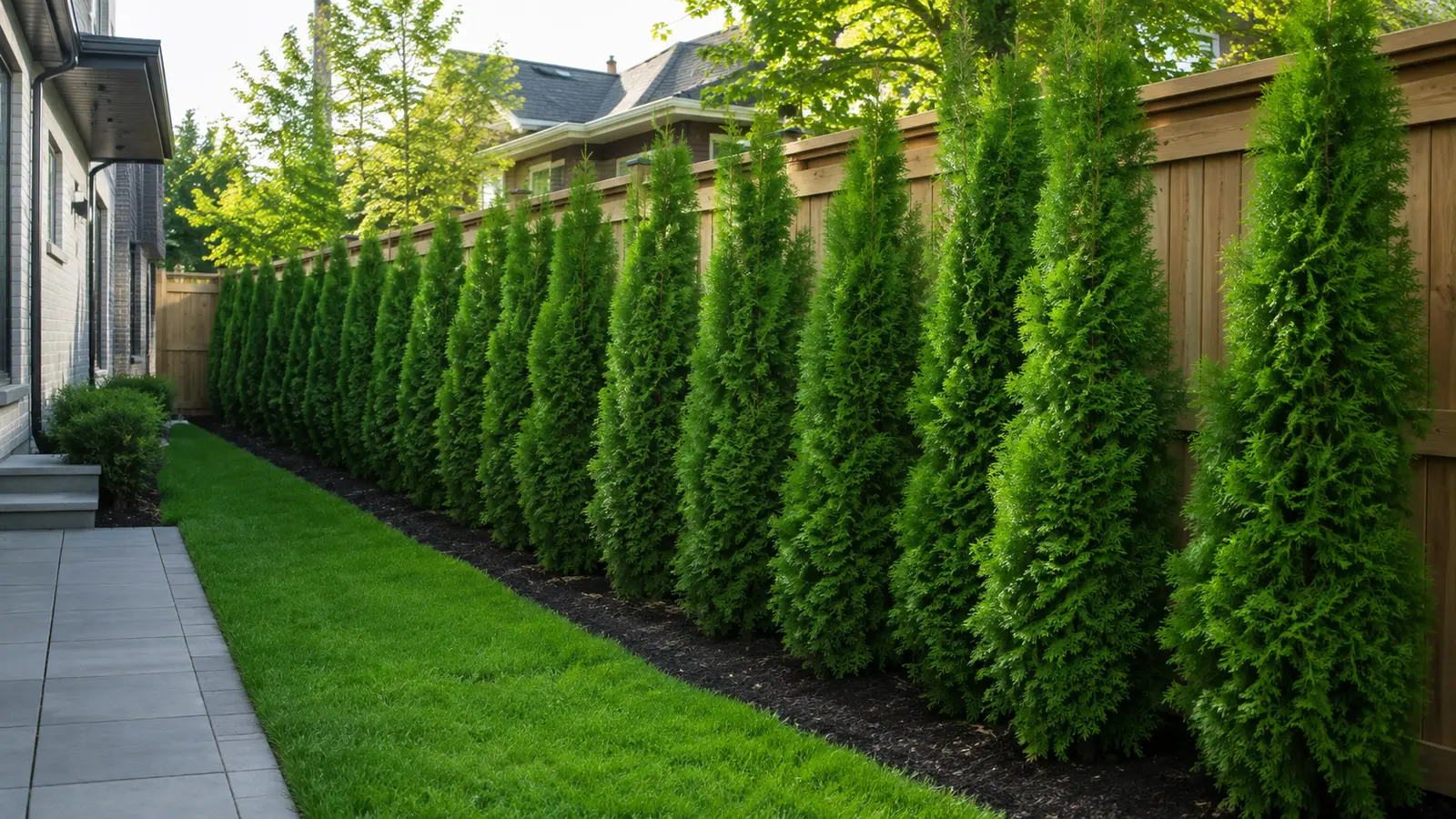
Thuja occidentalis ‘Smaragd’
Emerald Cedar
Emerald Cedar grows in a naturally slim, upright form with bright green foliage and pointed tops. It is a strong choice beside fences, walkways, driveways, and smaller urban yards where controlled width matters.
Advantages
- Narrow footprint for compact properties
- Naturally uniform and formal appearance
- Good green colour through Ontario winters
- Less frequent shaping than broader cedars
Considerations
- Usually closes into a solid wall more slowly
- Needs consistent moisture during establishment
- Can show individual pointed tops instead of one flat hedge line
- Poor drainage and winter exposure can cause browning
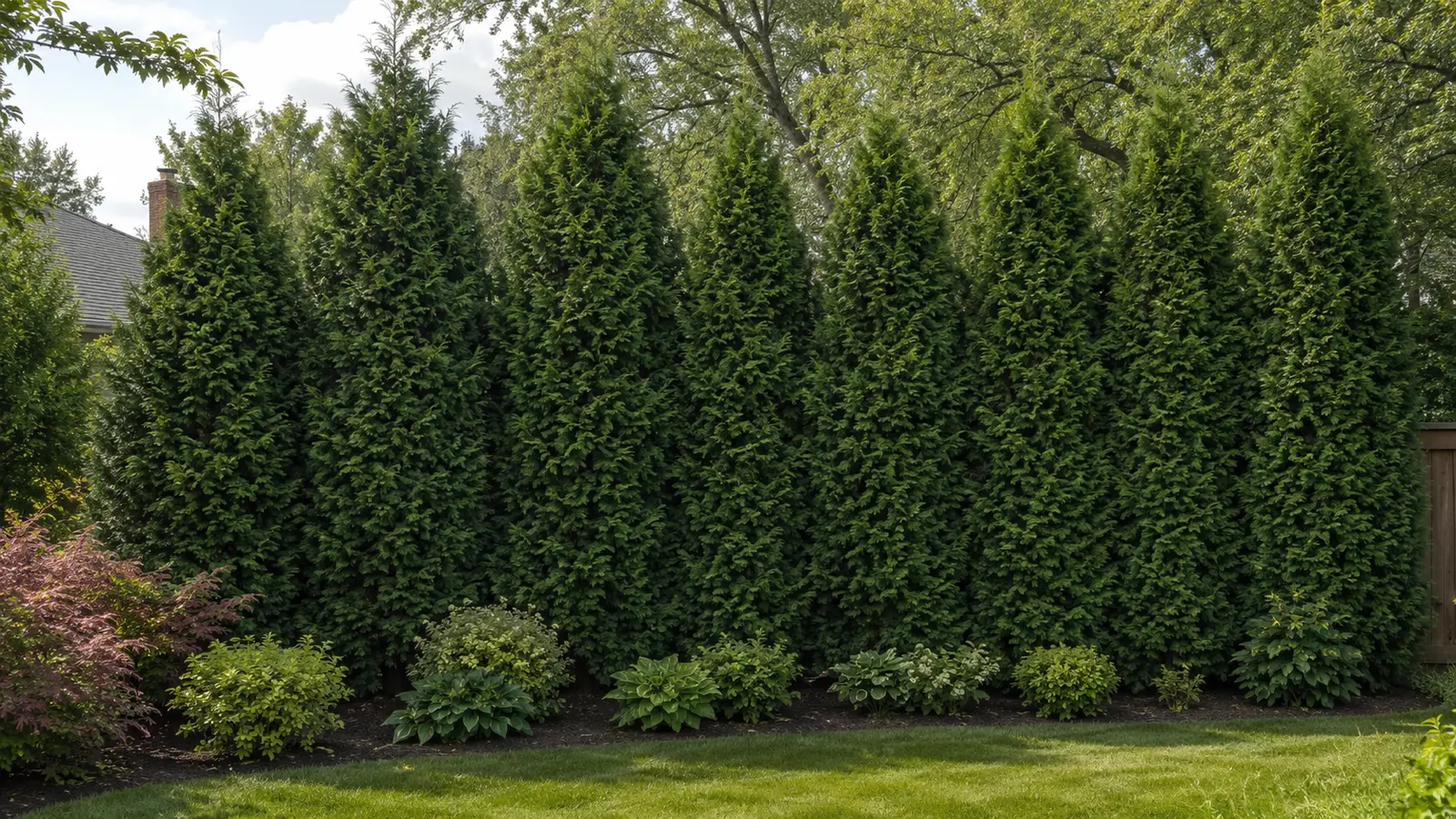
Thuja occidentalis ‘Nigra’
Black Cedar
Black Cedar has dense, dark green foliage and a broader pyramidal habit. It can create a taller, fuller screen than Emerald Cedar, making it useful where quick coverage matters and the planting bed has enough width.
Advantages
- Dense foliage and strong screening potential
- Dark green colour that generally holds well in winter
- Can grow taller and broader than Emerald Cedar
- Useful for wind screening and larger properties
Considerations
- Needs more horizontal space
- Usually requires more pruning to control height and width
- Can overwhelm a narrow side yard
- Larger specimens may cost more to buy and install
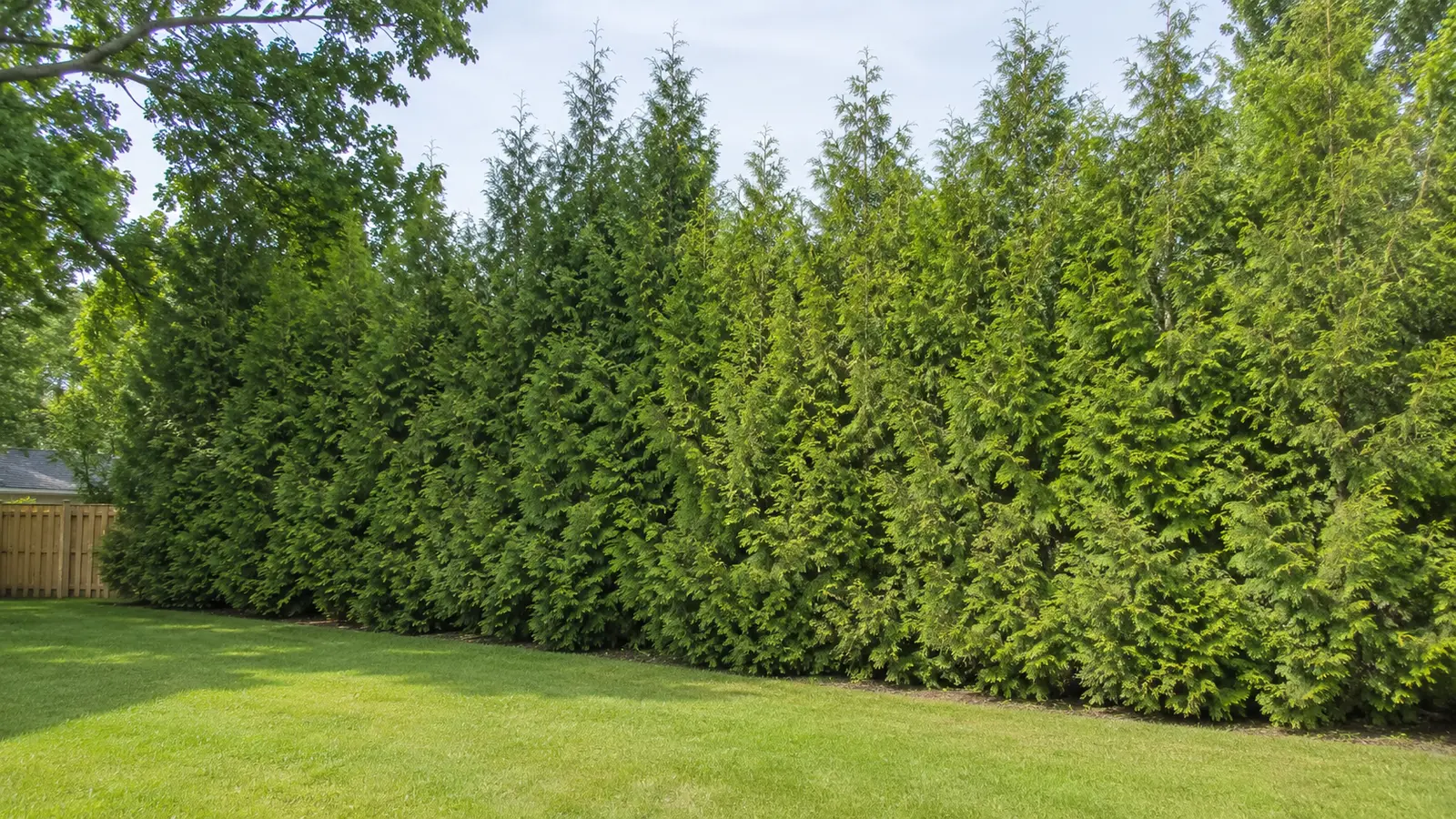
Thuja occidentalis
Eastern White Cedar
Eastern White Cedar is the native species from which many landscape cultivars were selected. It has a softer, less uniform form and can be clipped into a continuous hedge or allowed to create a natural privacy and wildlife screen.
Advantages
- Native to Ontario and extremely winter hardy
- Suitable for natural screens and traditional clipped hedges
- Often available as economical smaller stock
- Tolerates a useful range of soil moisture once established
Considerations
- Natural form is less uniform than Emerald Cedar
- Can become much taller and wider without pruning
- May bronze or yellow slightly during winter
- Requires regular trimming for a formal hedge shape
Side by side comparison
Emerald, Black, and White Cedar compared
Mature dimensions and growth rates are approximate. Soil, sunlight, water, pruning, nursery stock, and local exposure can change the result considerably.
| Feature | Emerald Cedar | Black Cedar | Eastern White Cedar |
|---|---|---|---|
| Best use | Narrow formal screen | Tall dense screen | Natural or clipped hedge |
| Typical form | Slim and columnar | Broad and pyramidal | Soft and naturally variable |
| Approximate mature height | 10 to 15 feet | 20 to 30 feet | 30 to 50 feet |
| Approximate mature width | 3 to 4 feet | 5 to 8 feet | 10 to 15 feet |
| Relative growth | Slow to moderate | Moderate to fast | Moderate |
| Winter colour | Strong bright green | Strong dark green | May bronze slightly |
| Pruning need | Low to moderate | Moderate | Moderate to high for a formal hedge |
| Space required | Least | Medium | Most |
How much do the three cedar types cost?
Price depends on true planted height, tree density, root ball size, source, quantity, delivery, site access, planting, and warranty. The following figures help with early planning but do not replace a property specific quote.
Emerald Cedar
NorthCedar’s currently listed tree prices range from $40 for 3 to 4 feet to $160 for 8 to 9 feet, before HST. Professional planting is available separately by tree size.
View current NorthCedar pricesBlack Cedar
Recent Ontario retail examples for 4 to 6 foot Black Cedars are approximately $70 to $190 per tree before delivery, planting, warranty, and HST. Larger or premium specimens can cost more.
Eastern White Cedar
Small native stock can begin around $20 to $30, while larger hedge grade trees may range from about $30 to $165 or more. Quality, density, root system, and size explain much of this wide range.
Important: NorthCedar specializes in Emerald Cedars. Black and White Cedar figures are general Ontario market examples, not NorthCedar quotations or a promise of current availability. Confirm every price and specification before ordering.
Best cedar for different Ontario yards
Narrow side yard or fence line
Choose Emerald Cedar. Its controlled width makes future access, trimming, and neighbour clearance easier to manage.
Tall screen for a larger backyard
Consider Black Cedar when you have enough width and want a darker, fuller screen that can be managed with regular pruning.
Natural acreage or wildlife screen
Choose Eastern White Cedar for a native, less formal planting where trees have enough space to develop their natural size.
Polished front yard landscaping
Emerald Cedar provides the most uniform ornamental appearance beside entrances, walkways, driveways, and formal garden beds.
Check these six details before ordering
Available width
Measure the planting bed, distance from the fence, access for trimming, and space required by the mature variety.
Sun and wind
Full sun usually supports denser growth. Exposed winter wind and reflected heat can increase moisture stress.
Soil drainage
Cedars need reliable moisture but roots should not remain in stagnant water. Test drainage and correct serious grading problems first.
Privacy timeline
Tree width, height, spacing, and growth habit determine how quickly gaps close. Do not overcrowd trees only for an immediate result.
Maintenance plan
Decide who will water during the first season and how the future height and width will be controlled without cutting into bare brown wood.
Complete installed cost
Compare tree quality, quantity, delivery, removals, soil work, planting, cleanup, warranty, and HST rather than tree price alone.
Plan the hedge before buying trees
Use our cedar quantity calculator and Emerald Cedar spacing guide to estimate the layout. Confirm the actual width and root ball of the trees before marking final positions.
Protect the new planting
Follow the complete cedar watering guide during establishment. If foliage begins changing colour, use the Ontario cedar recovery guide to identify likely stress before it spreads.
Cedar variety comparison FAQ
Which cedar is best for a privacy hedge in Ontario?
Emerald Cedar is usually best for a narrow and formal residential hedge. Black Cedar is better when you want a taller, denser screen and have more width. Eastern White Cedar works well for natural screens or traditional clipped hedges on larger properties.
Which grows faster, Emerald Cedar or Black Cedar?
Black Cedar generally grows faster and becomes larger than Emerald Cedar when sunlight, soil, moisture, and root health are suitable. Emerald Cedar grows more slowly but keeps a narrower and more predictable shape.
Which cedar stays greenest during winter?
Emerald and Black Cedar are selected partly for reliable winter colour. Eastern White Cedar may develop some natural bronze or yellow tones in cold weather. Severe browning on any variety can still indicate drought, salt, wind, drainage, or root stress.
Which cedar is best for a small Toronto backyard?
Emerald Cedar is usually the easiest choice for a small yard because its mature width is more controlled. The final spacing must still allow airflow, watering, trimming access, and room between the hedge, fence, and buildings.
Is White Cedar cheaper than Emerald or Black Cedar?
Small Eastern White Cedar stock is often less expensive, but large hedge grade trees can vary significantly in quality and price. Compare actual planted height, root ball size, density, delivery, installation, and warranty instead of comparing price alone.
Can Emerald, Black, and White Cedars be mixed in one hedge?
They can survive in similar conditions, but mixing them in one formal row usually creates uneven colour, width, height, and growth. Use one cultivar for a uniform hedge. Mixed cedars are better suited to a layered or natural landscape design.
Are these cedars deer resistant?
No cedar should be considered fully deer resistant. Deer can browse all three, especially during winter when other food is limited. Young trees may need protection in areas with regular deer activity.
Need help choosing the right cedar?
NorthCedar supplies and professionally plants Emerald Cedars across Toronto and the GTA. Send your hedge length, preferred height, location, and clear property photos. We can recommend a tree quantity, spacing plan, preparation method, and accurate installation quote for your yard.