
Ontario cedar diagnosis and recovery
Why Are My Cedar Trees Turning Brown?
Brown foliage can be normal seasonal shedding, or a warning about water, roots, winter exposure, salt, pests, or disease. This guide helps Ontario homeowners read the pattern, confirm whether the cedar is alive, and take the right recovery steps.
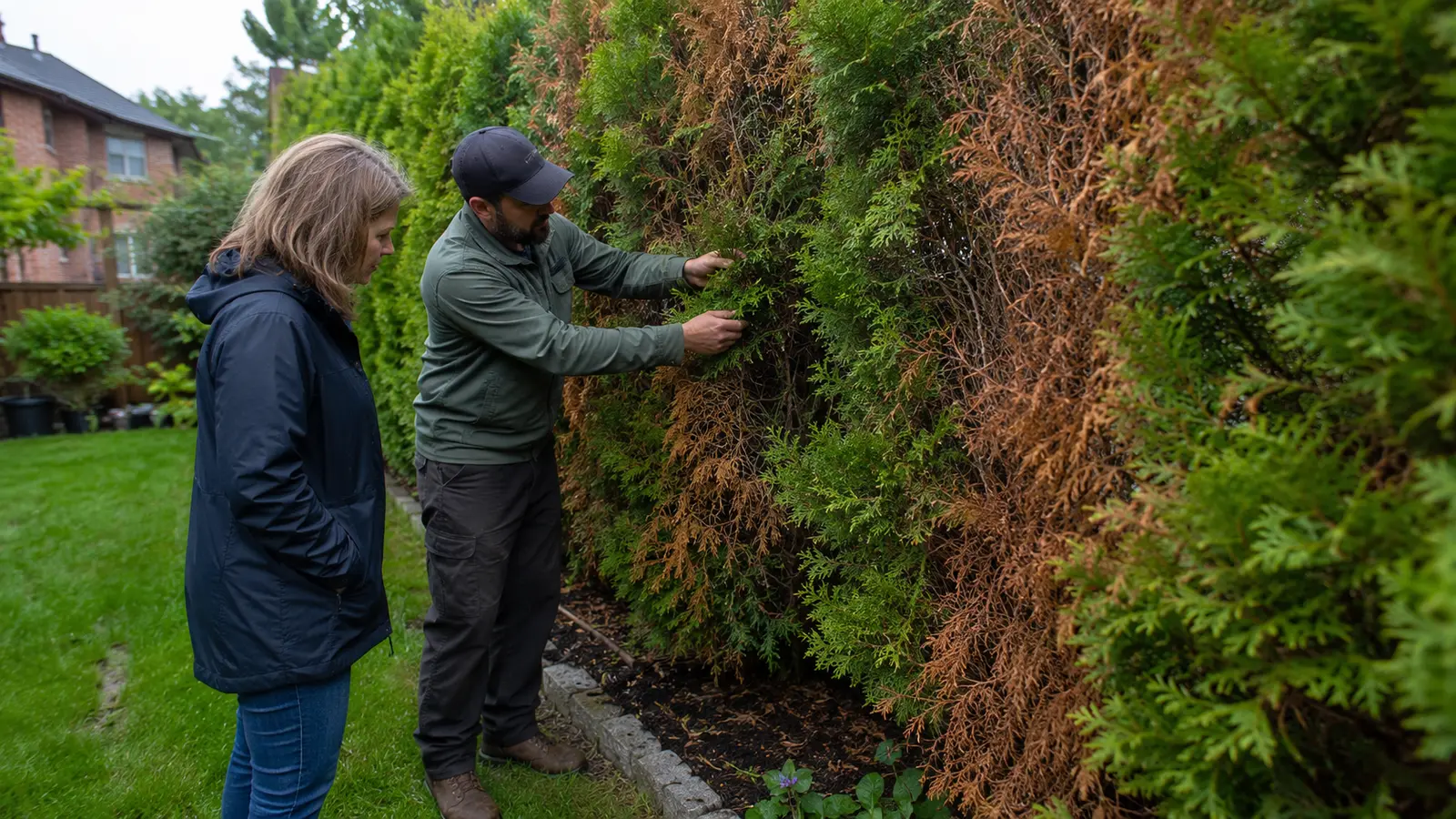
Is a brown cedar always dying?
No. Cedars naturally shed some older interior foliage, commonly in late summer and fall. A living tree can also show temporary brown tips after winter, drought, transplant stress, or a short irrigation problem. The damaged foliage will not become green again, but healthy branches can continue growing.
Concern rises when browning moves quickly, affects the outer growing tips, starts at the top, follows a wet or salty area, or appears with brittle twigs, trunk injury, webbing, lesions, or root problems. Examine the pattern before adding water, fertilizer, or pesticide.
Do not assume every brown cedar needs more water. Saturated soil can suffocate roots and create symptoms that look like drought. Always check below the surface first.
Seven common causes of brown cedar trees in Ontario
| Cause | Typical pattern | First response |
|---|---|---|
| Normal seasonal shedding | Older foliage inside the tree turns yellow or brown in late summer or fall while outer tips remain green. | Gently remove loose foliage and monitor. Even colour on the interior is usually less concerning than dead outer tips. |
| Dry soil or drought stress | Tips and outer foliage become dull, tan, or crispy, often during heat, wind, or the first two years after planting. | Check moisture below the surface, then water the root zone slowly and deeply when soil is dry. |
| Too much water or poor drainage | Foliage looks pale, yellow brown, or limp while soil stays wet, smells sour, or holds standing water. | Pause automatic watering, verify drainage, and correct grade or irrigation before roots lose more oxygen. |
| Winter burn | The south, west, or wind exposed face browns in late winter or early spring while protected foliage stays greener. | Wait for spring growth before pruning, water during dry periods, and protect vulnerable roots and foliage before next winter. |
| Road salt or deicing spray | Browning is strongest along a driveway, sidewalk, road, or snow storage edge, usually on the exposed side. | Redirect salty runoff and snow, use a physical screen, and flush affected soil with clean water after thaw when drainage permits. |
| Planting or root problems | One cedar declines steadily, leans, has a buried trunk flare, circling roots, compacted soil, or a root ball that dries faster than nearby soil. | Expose the root flare carefully, inspect the original root ball, and correct depth, compaction, or irrigation coverage. |
| Pests or disease | Browning appears in irregular patches with webbing, insects, exit holes, lesions, black fruiting bodies, or repeated branch dieback. | Photograph the symptoms closely and obtain a reliable identification before applying any treatment. |
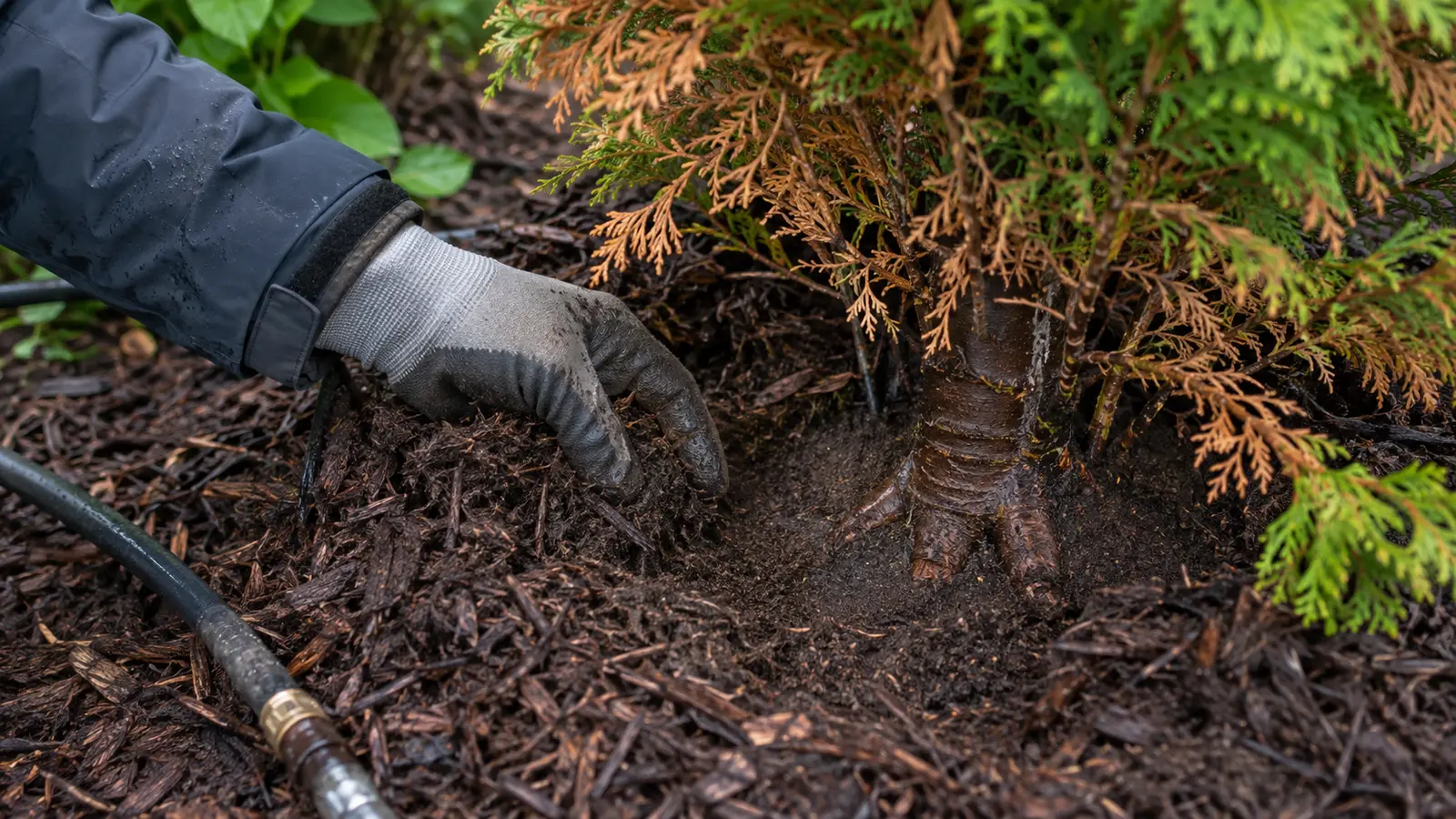
The most useful homeowner test: check the root zone
Surface colour can be misleading. Move mulch aside and test soil 8 to 12 centimetres down in two places: inside the original root ball and just beyond it. Newly planted cedars can have a dry root ball even when surrounding soil feels wet.
If soil is dry and crumbly, water slowly over the root zone. If it is sticky, saturated, or holds water, stop adding water and investigate drainage. Our complete cedar watering guide explains how to adjust for rain, heat, soil, and tree size.
Ontario winter burn and salt damage
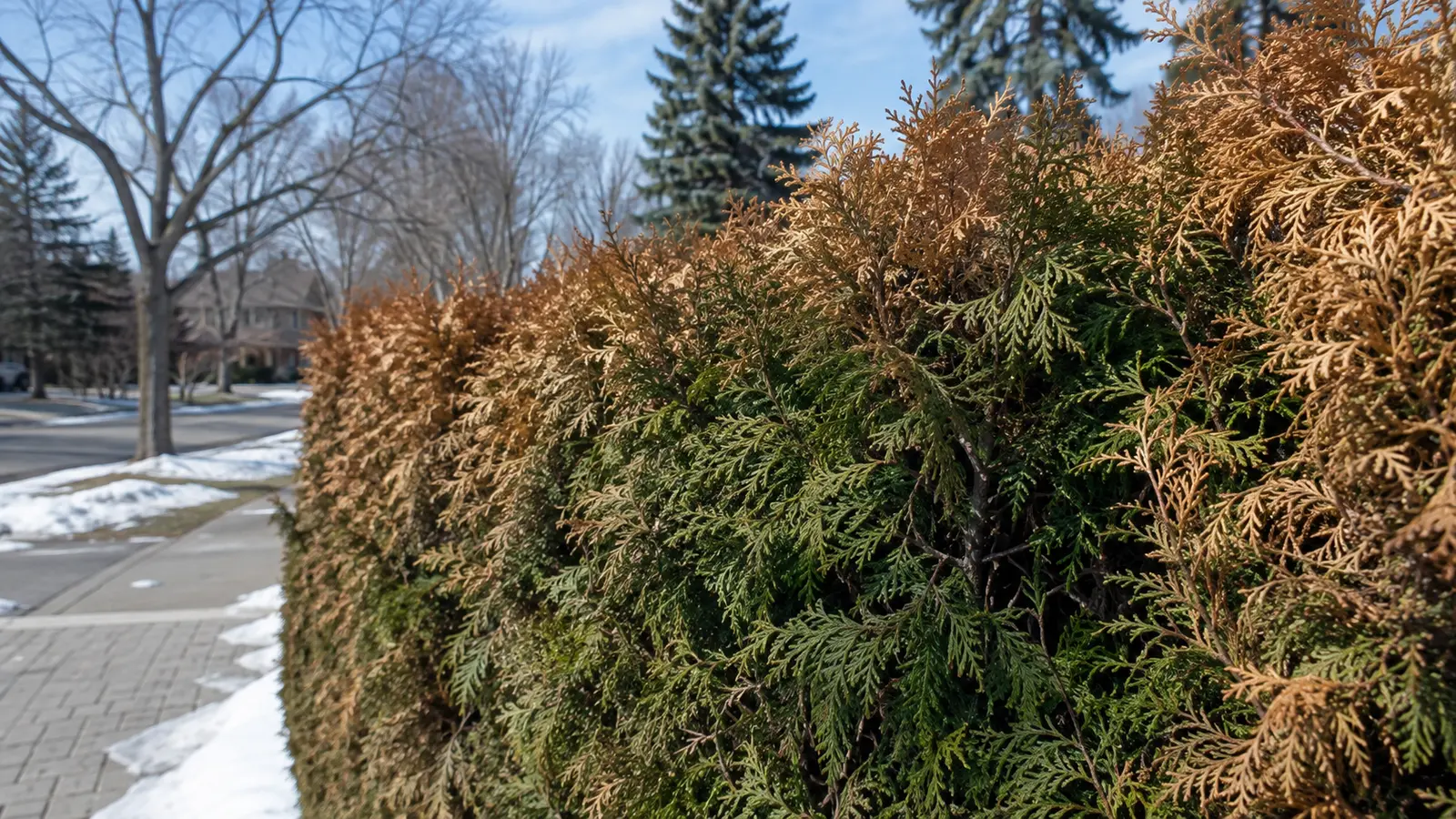
Cedars continue losing moisture through foliage on sunny, windy winter days. When the ground is frozen, roots cannot replace that moisture. Exposed south and west faces often brown first, especially on young or recently planted cedars.
Salt spray and salty snow can produce a similar one sided pattern beside roads, driveways, and sidewalks. Redirect snow storage, prevent runoff from entering the root zone, and use a breathable physical screen where exposure is severe. Wait for new spring growth before deciding how much to prune. Our Ontario cedar winter care guide shows how to prepare the hedge before the next freeze.
Cedar recovery plan
Work in this order so the treatment matches the actual problem and does not create another source of stress.
Step 1
Map the browning pattern
Look at the whole hedge before focusing on one branch. Note whether damage is inside or outside, one sided or random, top down or bottom up, and limited to one cedar or repeated across several trees. The pattern often points to weather, water, salt, roots, or a spreading problem.
Step 2
Confirm living tissue
Bend several small twigs. Living twigs are flexible and may show moist green tissue beneath a tiny scratch in the bark. Dry, brittle twigs that snap easily are dead. Test several heights and sides because one section can die while the rest survives.
Step 3
Check soil moisture properly
Move mulch aside and feel the soil 8 to 12 centimetres below the surface near the root ball and just beyond it. Dry, dusty soil indicates a need for slow watering. Sticky, saturated soil means more water could make the problem worse.
Step 4
Correct the cause before pruning
Adjust irrigation, improve drainage, uncover a buried root flare, redirect salty runoff, or reduce competing turf. Pruning brown foliage without correcting the stress will not stop new damage.
Step 5
Remove only confirmed dead growth
Wait until spring growth makes the living boundary clear, then cut dead tips back to a live green lateral branch. Do not cut deeply into bare old cedar wood because it may not produce new foliage.
Step 6
Support recovery without forcing it
Keep a 5 to 8 centimetre layer of natural mulch over the root zone without piling it against trunks. Avoid heavy fertilizer on a stressed cedar. Consistent moisture, healthy roots, and time are more useful than a quick flush of soft growth.
Step 7
Track change for four to eight weeks
Take photos from the same position and watch for expanding brown areas, new green tips, worsening lean, wet soil, or symptoms on neighbouring cedars. Recovery is gradual, and existing brown foliage will not turn green again.
What recovery actually looks like
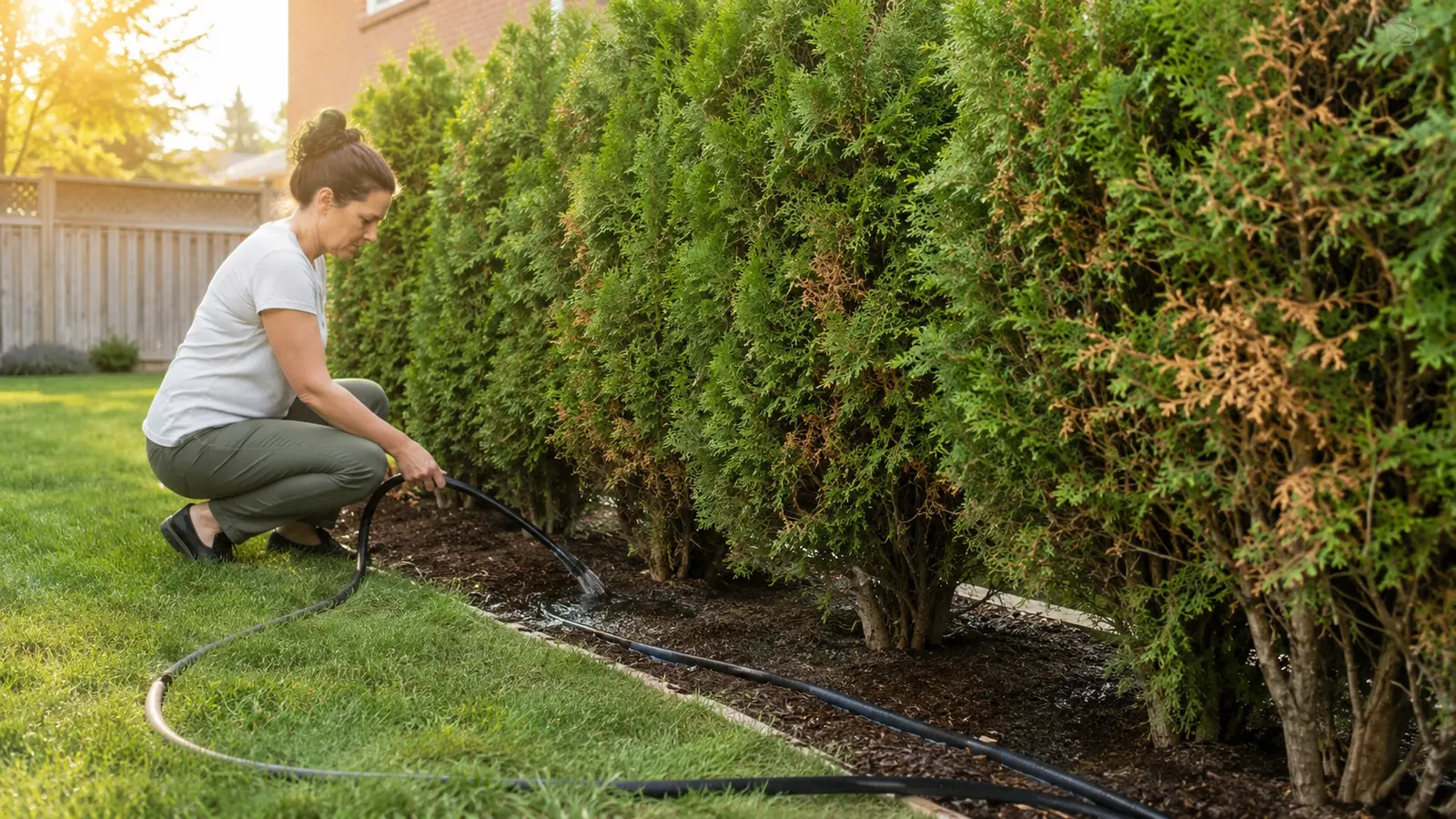
Existing brown foliage stays brown. Look instead for stable damage, flexible living twigs, and new light green tips. A stressed cedar may need a full growing season to show how much canopy it can rebuild.
Keep care steady rather than aggressive. Deep watering when soil is becoming dry, a proper mulch layer, and protection from repeated stress give surviving roots the best chance to support new growth.
When recovery is unlikely
The cedar is brown and brittle from top to bottom
No green tissue appears in several scratch tests
The trunk is badly split, girdled, or structurally unstable
Roots are severely decayed or the tree no longer anchors firmly
Living growth is too sparse to restore the privacy hedge
The same site problem cannot be corrected for this cedar
If replacement is necessary, first diagnose why the cedar failed. Then follow our guide to replacing a dead cedar in an existing hedge without unnecessarily damaging neighbouring roots.
Frequently asked questions
Can a brown cedar tree turn green again?
Brown cedar foliage does not turn green again, but living branches can produce new growth and the tree may recover after the cause is corrected. Recovery depends on how much live tissue and healthy root system remain.
How can I tell if my cedar is dead or just brown?
Check several twigs for flexibility and lightly scratch a tiny area of bark. Moist green tissue indicates that section is alive. A tree that is brown throughout, brittle from top to bottom, and has no living tissue is unlikely to recover.
Should I cut all the brown parts off my cedar?
Remove only growth that is confirmed dead and wait until new spring growth shows the living boundary. Cutting deeply into bare old wood can leave permanent holes because many cedars do not regrow well from leafless branches.
How often should I water a browning cedar in Ontario?
Water according to soil moisture, weather, tree size, soil type, and establishment stage rather than a fixed calendar. Check below the surface first. Water slowly when the root zone is becoming dry and delay watering when soil remains wet.
Why are my cedars brown after an Ontario winter?
Frozen soil, sun, wind, temperature swings, and salt can cause foliage to lose moisture faster than roots can replace it. This winter burn often appears on exposed south or west sides and may not become obvious until late winter or spring.
When should a brown cedar be replaced?
Replacement is usually reasonable when the entire tree is brittle with no living tissue, the trunk or roots are badly damaged, or the remaining live growth cannot restore a useful hedge. Diagnose the site before planting a new cedar in the same location.
Not sure what is causing the browning?
NorthCedar can assess your cedar hedge, identify likely site and care problems, and recommend recovery or replacement options for properties across Toronto and the GTA.
Request a cedar assessment