
Free cedar planning tool
How Many Cedar Trees Do I Need? Privacy Hedge Calculator
Enter your usable hedge length and planned centre spacing to get a clear cedar quantity. Then use the planning guide below to account for gates, corners, actual tree width, and Ontario site conditions.
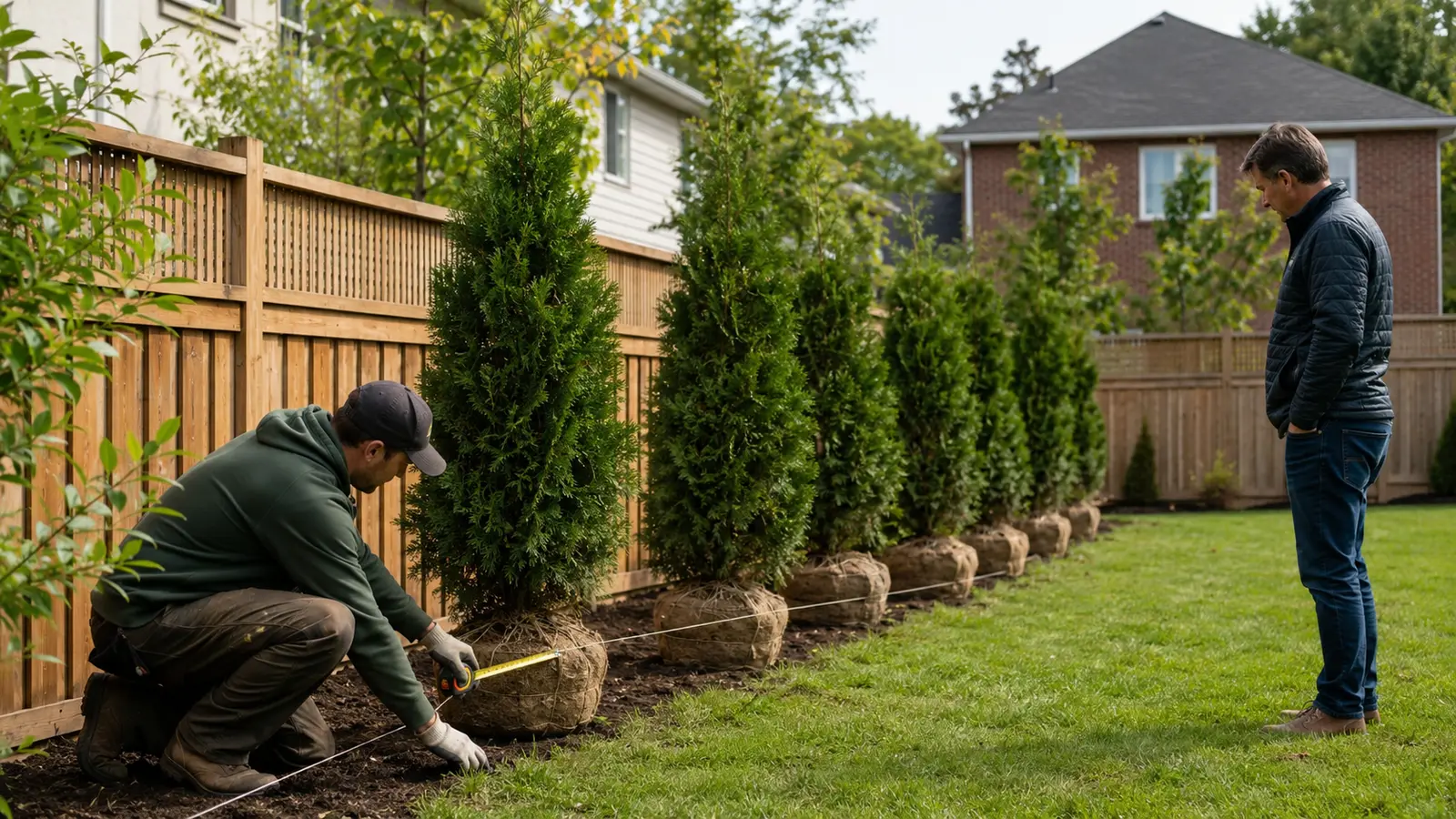
Cedar privacy hedge calculator
Enter the usable planting length and your planned centre spacing.
Estimated quantity
11
cedar trees
Usable length
30 feet
Maximum spacing
3 feet
Balanced layout
About 36 inches
Mark the full line before ordering. The balanced spacing keeps all intervals equal and at or below your selected maximum.
This is a planning estimate for a single row. Subtract gates and other openings first. Corners, curves, wide nursery stock, property setbacks, utilities, and site conditions can change the final quantity.
The cedar quantity formula
For a straight privacy hedge that begins and ends with a tree, use this planning formula:
Round up hedge length divided by spacing, then add one tree
Rounding up keeps every interval at or below your selected maximum. The calculator then redistributes the trees evenly along the full line. This avoids a short leftover gap at one end.
For example, 20 feet divided by 3 feet equals 6.67 intervals. Round that up to 7 intervals and add one endpoint tree. The result is 8 cedars spaced evenly at about 34.3 inches.
Tree quantity is only as accurate as the usable length. Subtract gates, paths, utility clearances, drainage structures, and any required setback before entering the measurement.
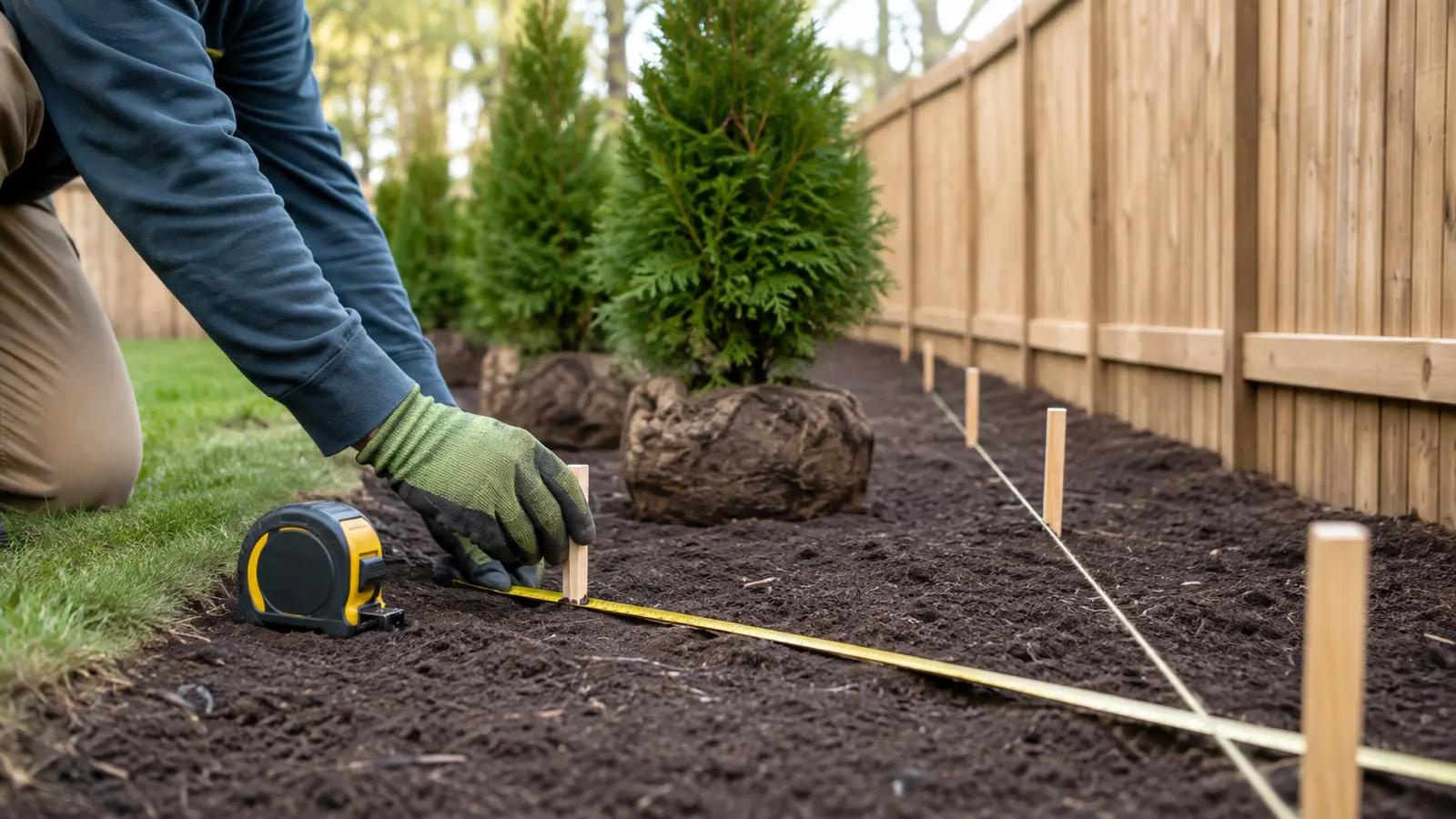
Spacing means trunk centre to trunk centre
Measure from the centre of one trunk to the centre of the next. Do not measure the empty gap between foliage or root balls, because nursery trees naturally vary in width.
A range near 2.5 to 3 feet is a useful starting point for many Emerald Cedar privacy hedges, but it is not a universal rule. Read our complete Emerald Cedar spacing guide before choosing the value for your project.
Common cedar hedge quantity examples
3 foot maximum spacing
20 foot hedge: 8 cedar trees
Seven equal intervals of about 34.3 inches
3 foot maximum spacing
30 foot hedge: 11 cedar trees
Ten equal intervals of 36 inches
2.5 foot maximum spacing
40 foot hedge: 17 cedar trees
Sixteen equal intervals of 30 inches
3 foot maximum spacing
50 foot hedge: 18 cedar trees
Seventeen equal intervals of about 35.3 inches
Every example assumes one straight row with a cedar at both ends. Use the calculator for your exact usable length.
Treat gates, corners, and separate sections carefully
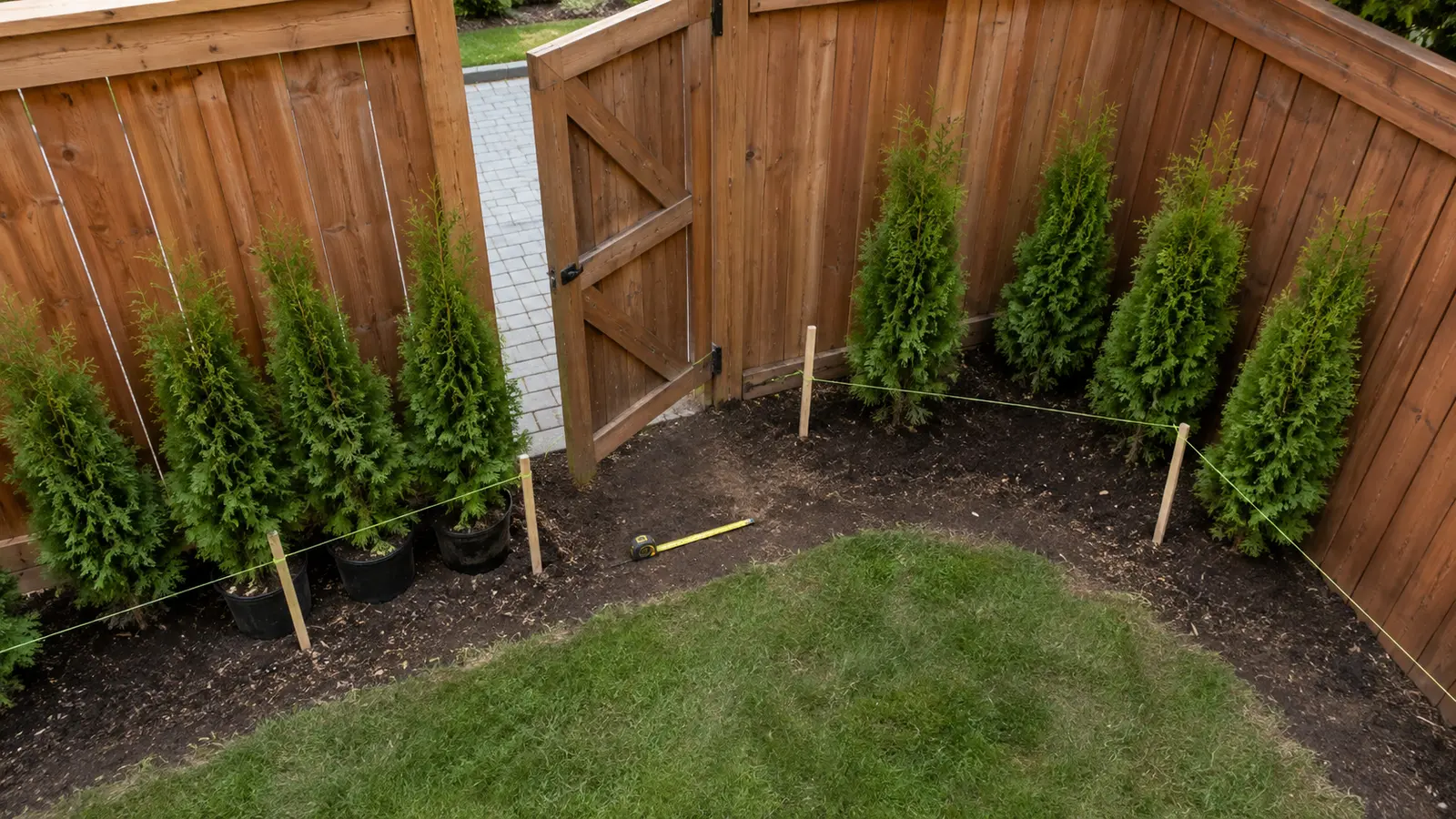
Do not measure through a gate or walkway. Calculate the line on each side as a separate section. Decide whether each section needs a cedar at both endpoints before adding the results.
At a corner, two lines may share one visual corner position, but root ball size and fence access can require a different layout. Mark both directions on the ground before deciding whether to combine or separate the counts.
Plan your cedar hedge in six steps
Step 1
Mark the usable hedge route
Identify the exact start and end points. Exclude gates, walkways, utility access, drainage features, and any area where a cedar cannot be planted.
Step 2
Measure each straight section
Measure along the planned trunk line rather than the fence surface or outer foliage. Record separate lengths when the hedge turns a corner.
Step 3
Choose centre to centre spacing
Select spacing that matches the actual width of the nursery stock, desired privacy timeline, soil, light, irrigation, and the grower recommendation.
Step 4
Calculate each section
Enter the usable length and spacing in the calculator. Keep the end tree option selected when the section should begin and end with a cedar.
Step 5
Mark every trunk centre
Use a taut guide string and a stake for every cedar. Spread any small remainder equally so the finished intervals stay balanced.
Step 6
Confirm before ordering
Check root ball width, access, setbacks, utilities, corner placement, and final spacing on the ground before purchasing the trees.
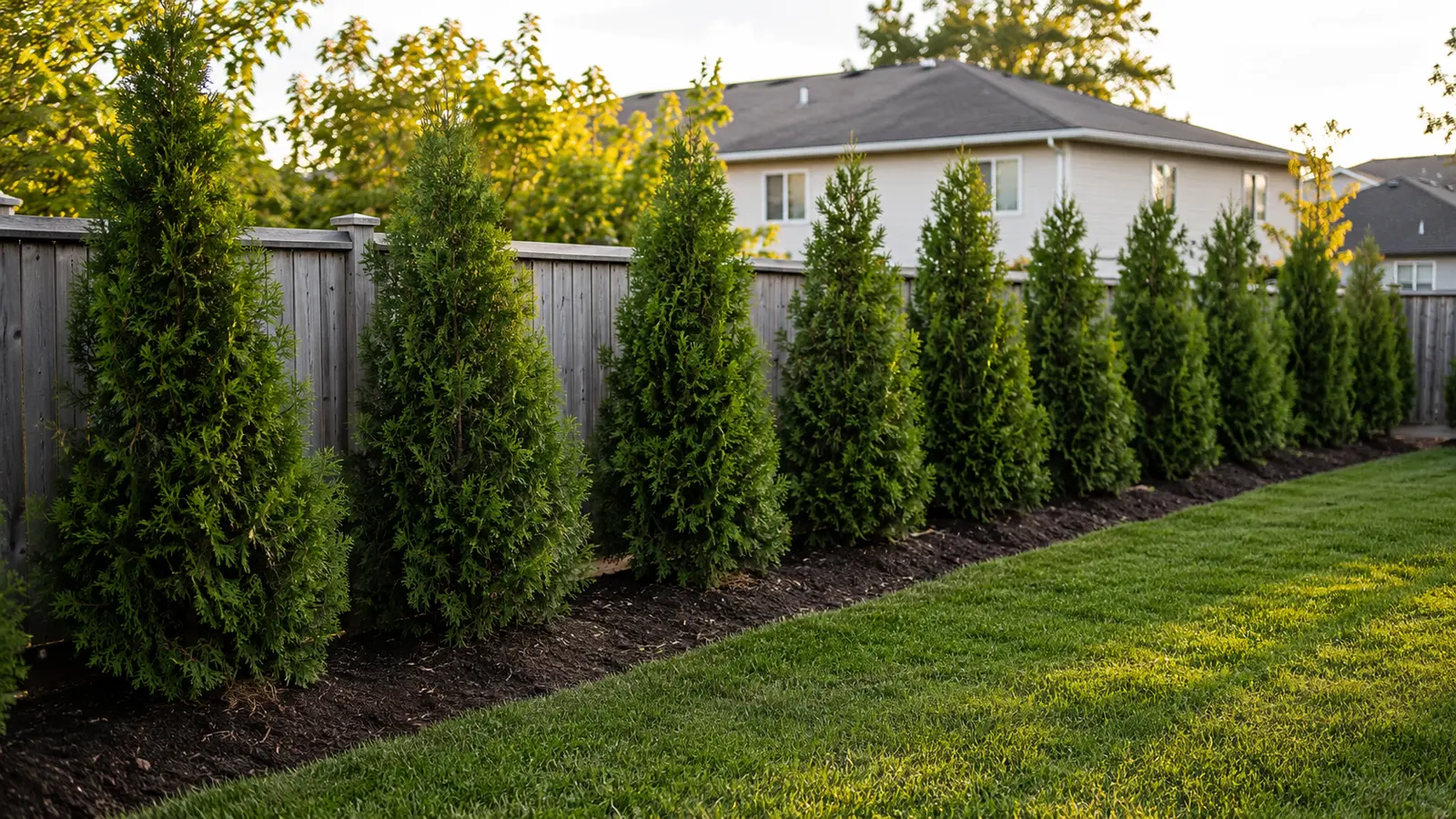
Before you order your cedars
Measure the width of the actual nursery stock
Confirm property lines and required setbacks
Arrange required utility locates before digging
Check machine and delivery access to the planting area
Plan even watering for every new root ball
Confirm soil drainage and finished planting grade
Once you know the estimated quantity, review the Emerald Cedar planting cost guide to understand how tree size, delivery, access, preparation, and installation affect a complete project budget.
After planting, every root ball needs consistent moisture. Use the newly planted cedar watering guide to plan the first growing season.
Frequently asked questions
What formula calculates how many cedar trees I need?
For a straight hedge with a cedar at both ends, divide the usable hedge length by the maximum centre to centre spacing, round up to the next whole interval, then add one tree. Mark the line before ordering because openings and site restrictions can change the count.
How many cedars do I need for a 20 foot hedge?
At a maximum spacing of 3 feet centre to centre with trees at both ends, a 20 foot line needs 8 cedars. This creates seven equal intervals of about 34.3 inches.
How many cedar trees do I need for 50 feet?
At a maximum spacing of 3 feet with trees at both ends, a 50 foot line needs 18 cedars. At 2.5 feet, the same line needs 21 cedars. The actual tree width and site should guide the spacing choice.
Should I space Emerald Cedars 2.5 or 3 feet apart?
Both can be practical planning choices for many residential hedges. Spacing near 2.5 feet can close sooner with narrow stock but uses more trees and increases root competition. Three feet often offers more room, but the best choice depends on actual tree width and site conditions.
Do I add one tree after dividing length by spacing?
Add one when both ends of a straight measured section need a cedar. The added tree represents the second endpoint. Do not automatically add one when an end must remain open or when separate hedge sections share a corner position.
Does the calculator work for a double row cedar hedge?
The calculator estimates one row at a time. For a double row, calculate each row separately and plan the staggered layout, row separation, root space, irrigation, and maintenance access before combining the quantities.
Want the final quantity confirmed on site?
NorthCedar can measure your hedge route, recommend spacing, supply healthy Emerald Cedars, and complete the installation across Toronto and the GTA.