
Toronto backyard planting
Can Emerald Cedars Grow in Shade? A Toronto Backyard Guide
A fence, a neighbour's house or an old maple can leave your planting line in shade for much of the day. Before ordering a hedge, take a closer look at where the light actually falls.
By NorthCedar · Published
Before you buy
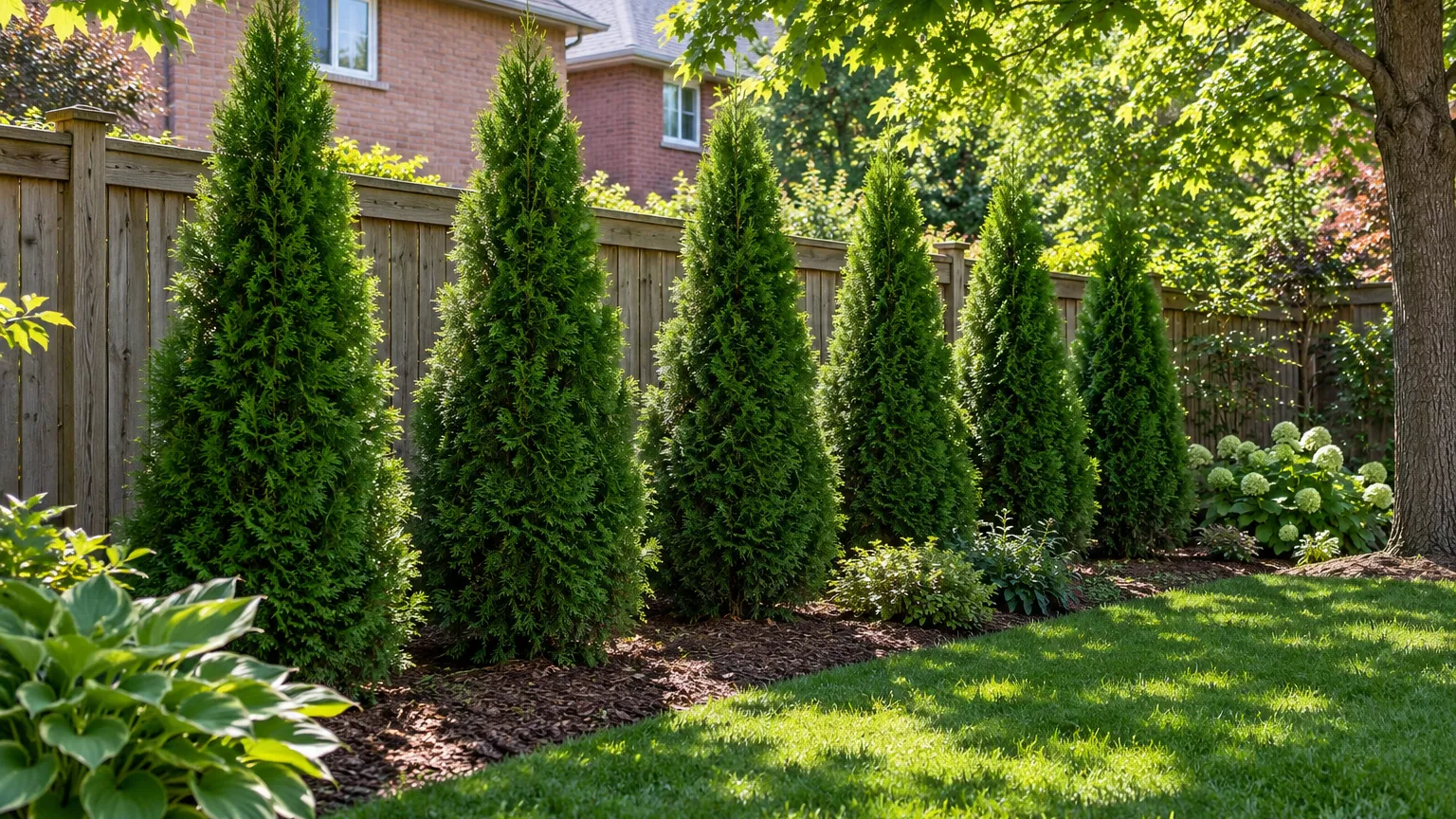
Yes, Emerald Cedars can grow in partial shade
Emerald Cedars grow best in full sun and can tolerate partial shade. Deep shade is a poor choice for a dense privacy hedge. Trees may remain alive while becoming too thin to screen the fence or neighbouring yard properly.
Emerald Cedar is Thuja occidentalis 'Smaragd', also called Emerald Green arborvitae. Kwantlen Polytechnic University lists this cultivar for full sun or part sun and part shade. NC State Extension explains that eastern white cedar foliage thins substantially in full shade. Check your particular planting line before deciding.
How much sunlight is enough?
About six or more hours of direct sun is the usual full sun benchmark. Partial shade covers a wide range of conditions. These categories help describe the site; they are not a promise of a particular growth rate or hedge thickness.
| Light at the planting line | What to look for | What it means for your hedge |
|---|---|---|
| Full sun | About 6 or more hours of direct sunlight a day | The strongest starting point for a dense hedge, with suitable soil and watering. |
| Partial shade | Direct sun for part of the day, with shade for the rest | Can work. Check the whole planting line and allow for a less uniform screen. |
| Dappled shade | Moving patches of light beneath a tree canopy | Assess carefully. A few bright patches do not tell you the total light or the effect of nearby tree roots. |
| Deep shade | Little direct sunlight between buildings or beneath a dense canopy | A poor choice for a dependable, dense Emerald Cedar screen. Review the location or planting plan. |
The six hour benchmark follows NC State Extension's full sun definition. The planting decisions here are practical guidance, not measured performance thresholds for Toronto gardens.
Check sunlight where the trees will stand
A sunny patio does not tell you how much light reaches the fence. Follow the actual proposed hedge line.
- Mark the start, middle and end of the row, including any darker corner.
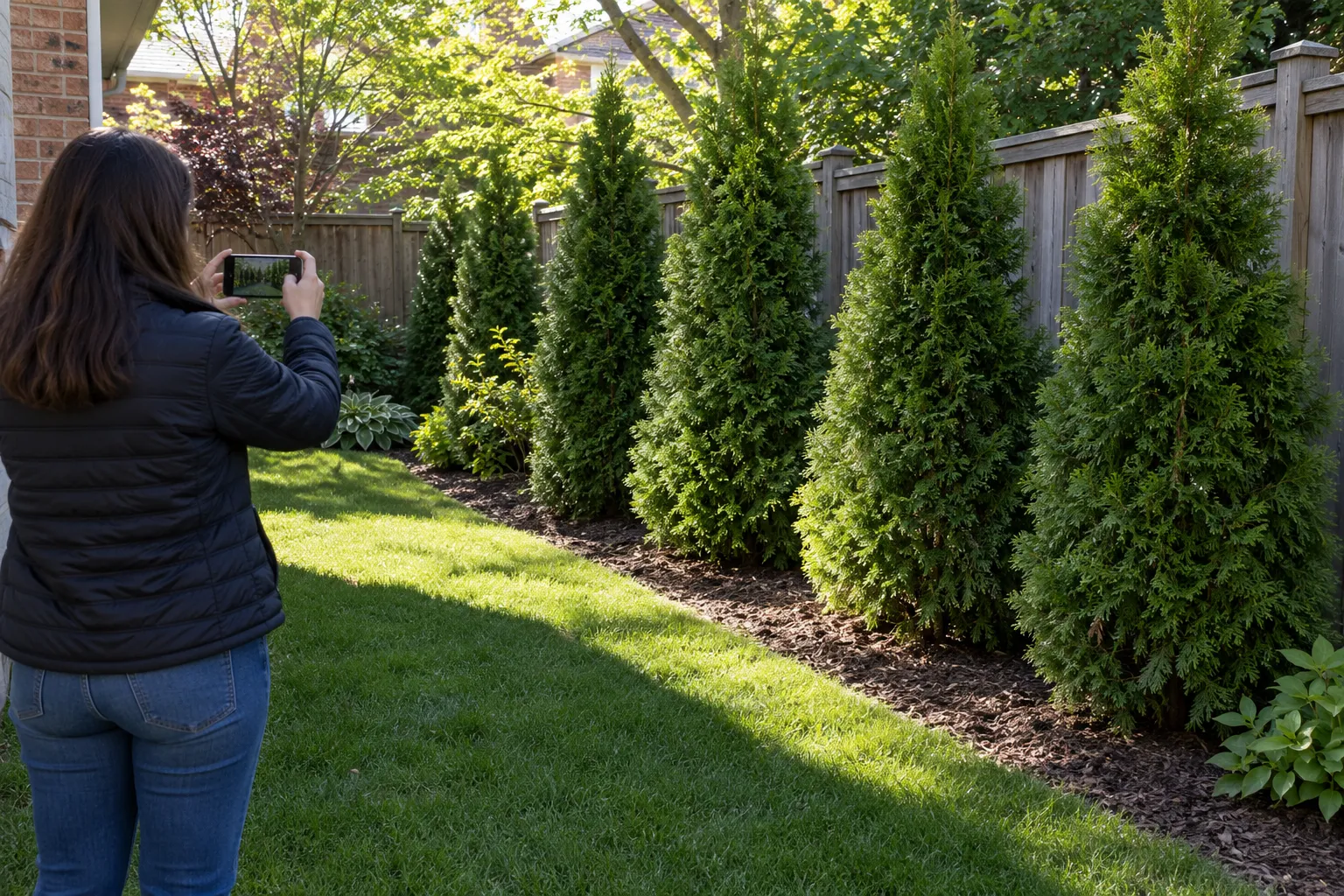
- On a clear day, take photos every hour or two. Record when direct sun reaches each section.
- Look at the height of the lower branches as well as the future tree tops. Sun above a fence may miss the lower half of a cedar.
- Repeat on another clear day. If deciduous trees are bare, check again when their leaves are fully open.
- Include nearby fences, overhangs and buildings in your photos so the shadows make sense.
If you are planning in October, be careful with the result. Shorter days and a lower sun angle change building shadows, while leaf drop can let more light through a canopy. Autumn photos alone cannot settle a summer shade question.
Three Toronto backyard situations to think through
Morning sun beside a fence
This can be a reasonable candidate if direct morning light reaches much of the foliage. Check how long it lasts and whether the fence shades the bottom of the trees. Leave room for mature width and maintenance access rather than pressing the trees against the boards.
A narrow strip between houses
A bright sky overhead can make a side yard feel lighter than it is. If both buildings keep the planting line out of direct sun for most of the growing season, reconsider an Emerald Cedar screen. Taller trees may put the tops in light while leaving lower foliage in the same shadow.
A hedge beneath a mature maple
Look at the canopy and soil together. A large tree can affect light, planting space and moisture near the hedge. Do not assume shaded soil is damp, or cut established tree roots to fit the row. If digging would disturb substantial roots, get an arborist's advice before proceeding.
These are planning examples, not site assessments. A row with uneven light may grow unevenly. Our Emerald Cedar growth guide explains why privacy timelines should allow for different conditions.
Caring for Emerald Cedars in partial shade
Check the root ball and surrounding soil before watering. A sheltered bed may dry slowly, while soil beneath trees can be surprisingly dry. Water the root zone when needed and let moisture and drainage guide the next watering. Our cedar watering guide explains those checks.
Mulch helps manage moisture and reduce weed competition. Keep it clear of trunks and check beneath it rather than judging the bed by its surface. Persistently wet soil, standing water or a dry root ball needs attention even in shade.
Give each tree growing room. Squeezing more cedars into a dark strip does not add light. Choose spacing for the trees and site using our Emerald Cedar spacing guide. Fertilizer cannot make up for a lack of sunlight.
If a shaded side becomes thin or brown, check watering, drainage and other damage before deciding shade is the only cause. Use our cedar browning guide to compare symptoms. Review the cedar hedge trimming guide before removing healthy foliage as a quick fix.
What if your yard is too shaded for cedars?
Start with the privacy problem. Screening a seating area may need a different layout from screening the entire boundary. Moving a short planting line into a brighter area may be more useful than filling the darkest strip.
A locally suitable yew is one option to discuss with a nursery for shade. Choose a cultivar for your soil, space and winter exposure, and consider its toxicity if children or pets use the yard. Every shaded property will not suit an Emerald Cedar hedge.
A fence or mixed planting may fit better. Our Toronto cedar hedge versus privacy fence guide compares the practical choices. If cedars suit the site, check current tree and planting prices after settling the location and quantity.
Common questions about cedars and shade
Can Emerald Cedars grow in full shade?
Full shade is a poor choice for a dense privacy hedge. Emerald Cedars tolerate partial shade, but foliage can become noticeably thinner with too little light. A tree remaining alive does not mean it will provide the screen you want.
How many hours of sun do Emerald Cedars need?
Use about 6 or more hours of direct sunlight as the usual full sun benchmark. Partial shade can work, but no single minimum hour count guarantees a dense hedge. The season, light intensity and exposure of the lower branches also matter.
Will morning sun and afternoon shade be enough?
It can be a workable location if a useful period of direct morning sun reaches the planting line. Check the lower foliage as well as the tops, and assess the whole row when nearby deciduous trees have leaves.
Can I plant Emerald Cedars on the north side of a house?
Possibly. Direction alone is not enough to decide. An open north facing yard may receive much more light than a narrow strip between buildings. Record the sunlight at the intended planting line before choosing trees.
Will larger cedars solve a shade problem?
Larger trees provide more height at installation, but their lower foliage still needs light. Buying taller trees does not correct a dark planting site or guarantee the hedge will stay dense.
Should I water cedars less if they are in shade?
Check the root ball and surrounding soil first. A sheltered bed can stay moist longer, while soil under a large tree can still be dry. Adjust watering to actual moisture, drainage and weather rather than reducing it automatically.
Not sure your planting line gets enough sun?
Send NorthCedar your Toronto or GTA neighbourhood, hedge length and photos of the planting line at different times of day. Include nearby buildings and large trees so we can help you plan the next step.