
Toronto and Ontario shrub care
Newly Planted Shrub Care: First Days, Weeks, and Years
Help new bushes and shrubs develop strong roots through Ontario heat, rain, wind, and winter. Follow this simple timeline from planting day through mature seasonal care.
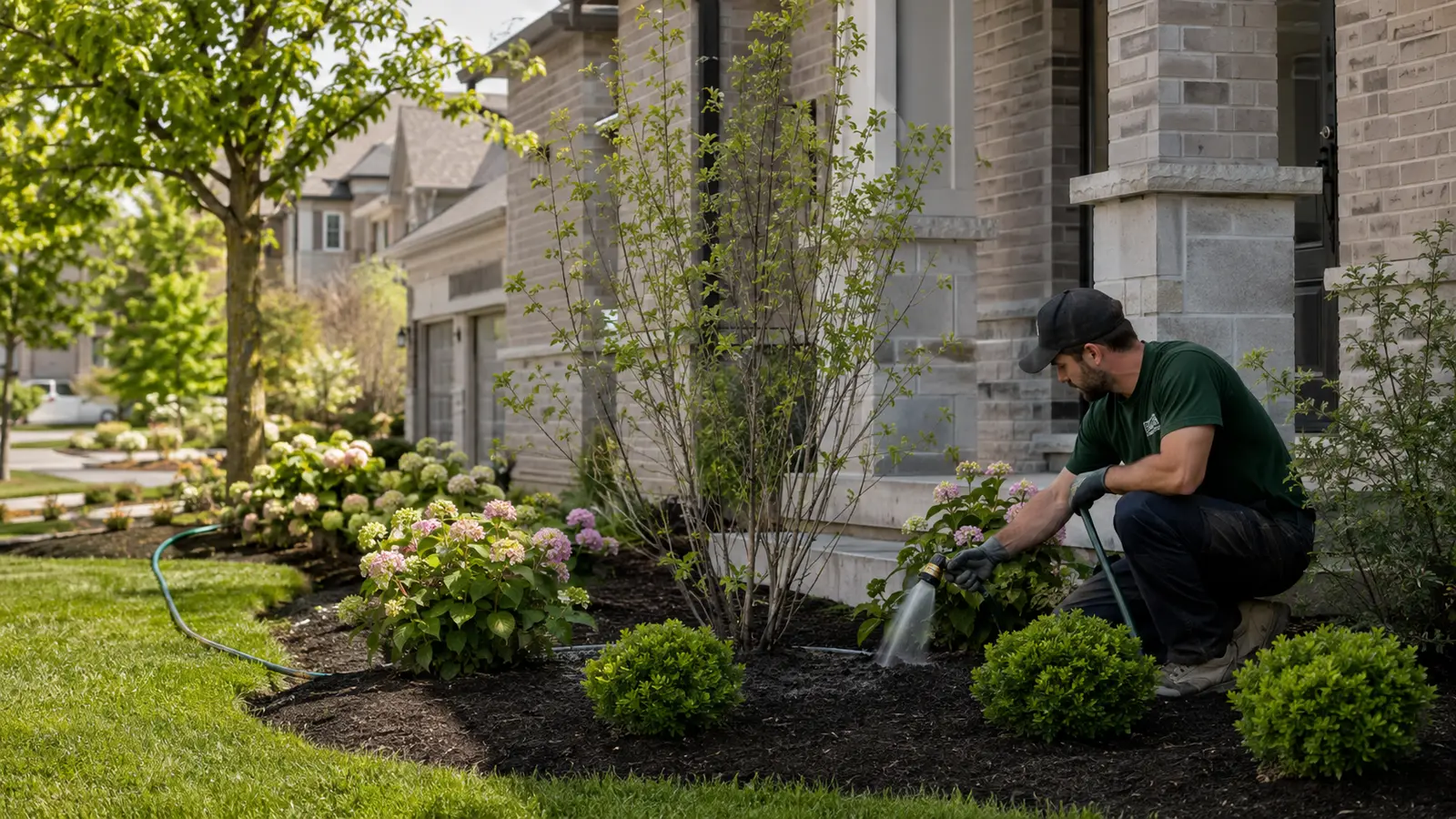
The most important rule: check the soil, not just the calendar
Newly planted shrubs have a small root system compared with the surrounding garden. Their root balls can dry out even when the nearby soil looks damp. They can also remain dangerously wet in compacted clay or a poorly drained planting hole.
Toronto weather changes quickly, so there is no single watering schedule for every shrub. Check below the mulch and feel the soil within the root ball. Water deeply when it begins to dry, then allow excess water to drain.
Moist, not soaked
Aim for even root zone moisture
Adjust for weather
Heat and wind increase demand
Protect the stems
Keep mulch away from the crown
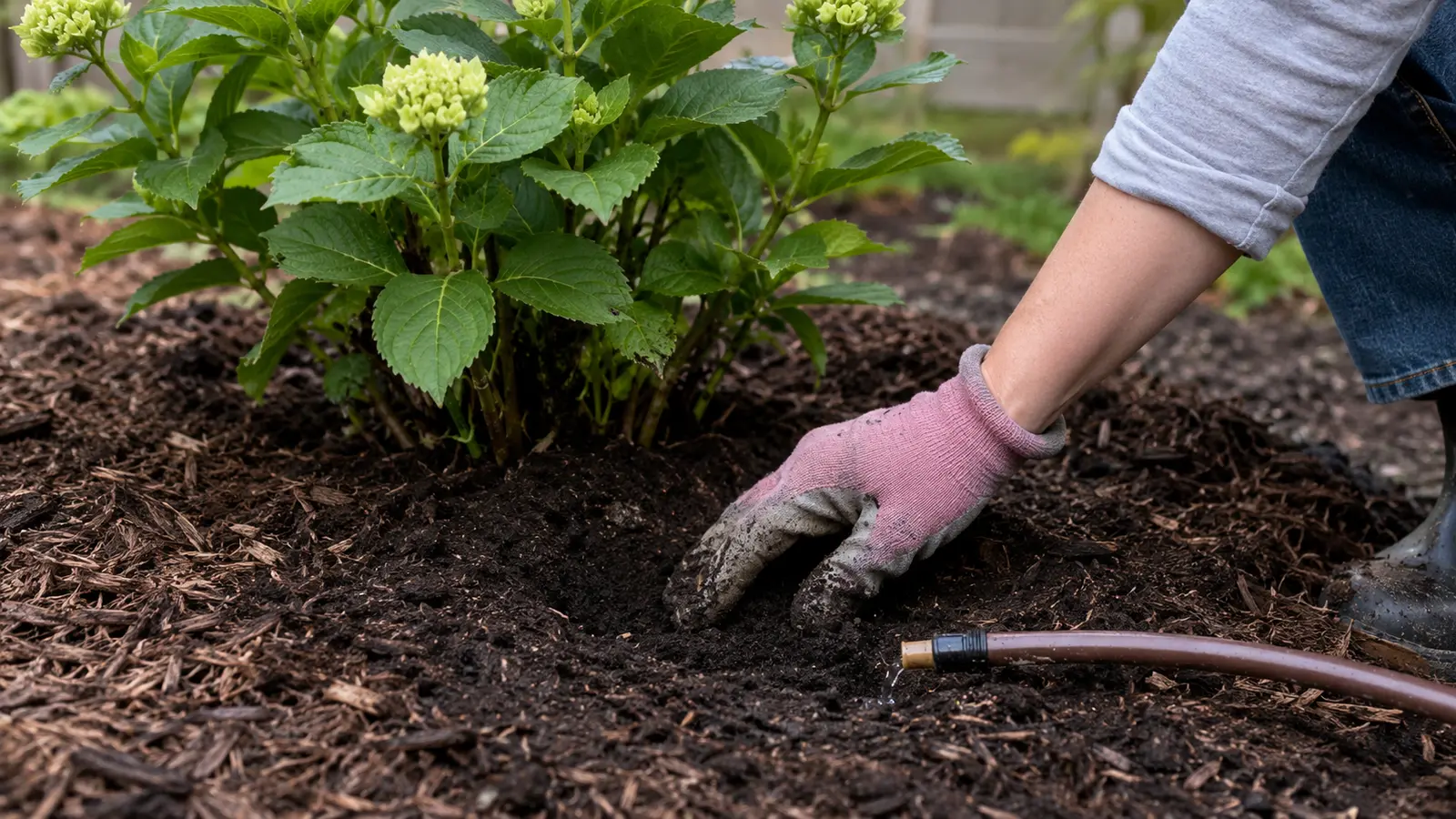
How to check whether a new shrub needs water
- 1Move the mulch aside without damaging surface roots.
- 2Feel the soil several centimetres below the surface inside the original root ball.
- 3Check the surrounding soil too, because the two areas may dry at different speeds.
- 4Water slowly when the root ball is beginning to feel dry. Wait when it remains evenly moist.
- 5Restore the mulch while leaving clear space around stems and the crown.
Complete shrub care timeline
Use these stages as a practical guide, then adjust for the shrub species, planting season, site exposure, rainfall, soil, and drainage.
Planting day
Soak the entire root ball
Water slowly until the root ball and surrounding soil are evenly moist. Confirm the plant is upright, the root flare is not buried, and soil has settled without leaving large air pockets.
Days 2 to 7
Check moisture every day
Feel the soil in the root ball and just outside it. Water when it begins to feel dry, but do not keep it saturated. Hot, windy weather may dry a new shrub quickly; cool or rainy conditions may reduce watering.
Weeks 2 to 6
Shift toward deeper watering
Continue checking frequently, then water deeply when needed rather than giving a light daily spray. The goal is even moisture that encourages roots to move into the surrounding soil.
First summer
Adjust for heat, rain, and soil
Check new shrubs several times each week during dry periods and heat waves. Clay holds water longer than sandy soil. Rain only replaces watering when it reaches the full root zone.
First fall
Keep roots hydrated before freeze up
Continue watering during dry autumn weather while the ground remains workable. Refresh a modest mulch layer, clear leaves that could mat against stems, and avoid late fertilizer that encourages tender growth.
First winter
Protect vulnerable shrubs
Use a burlap wind screen for exposed evergreens or salt prone sites when appropriate. Keep road salt and piled snow away, and gently remove dangerous snow loads without striking frozen branches.
Year 2
Support establishment, not dependency
Water during extended dry periods, maintain mulch, remove dead or damaged wood, and check whether spacing still allows the shrub to develop its natural form. Most shrubs still benefit from monitoring through their second growing season.
Year 3 and beyond
Move to seasonal maintenance
Established shrubs usually need supplemental water mainly during drought. Prune at the correct time for the species, replenish mulch as it breaks down, inspect annually, and avoid shearing every shrub into the same shape.
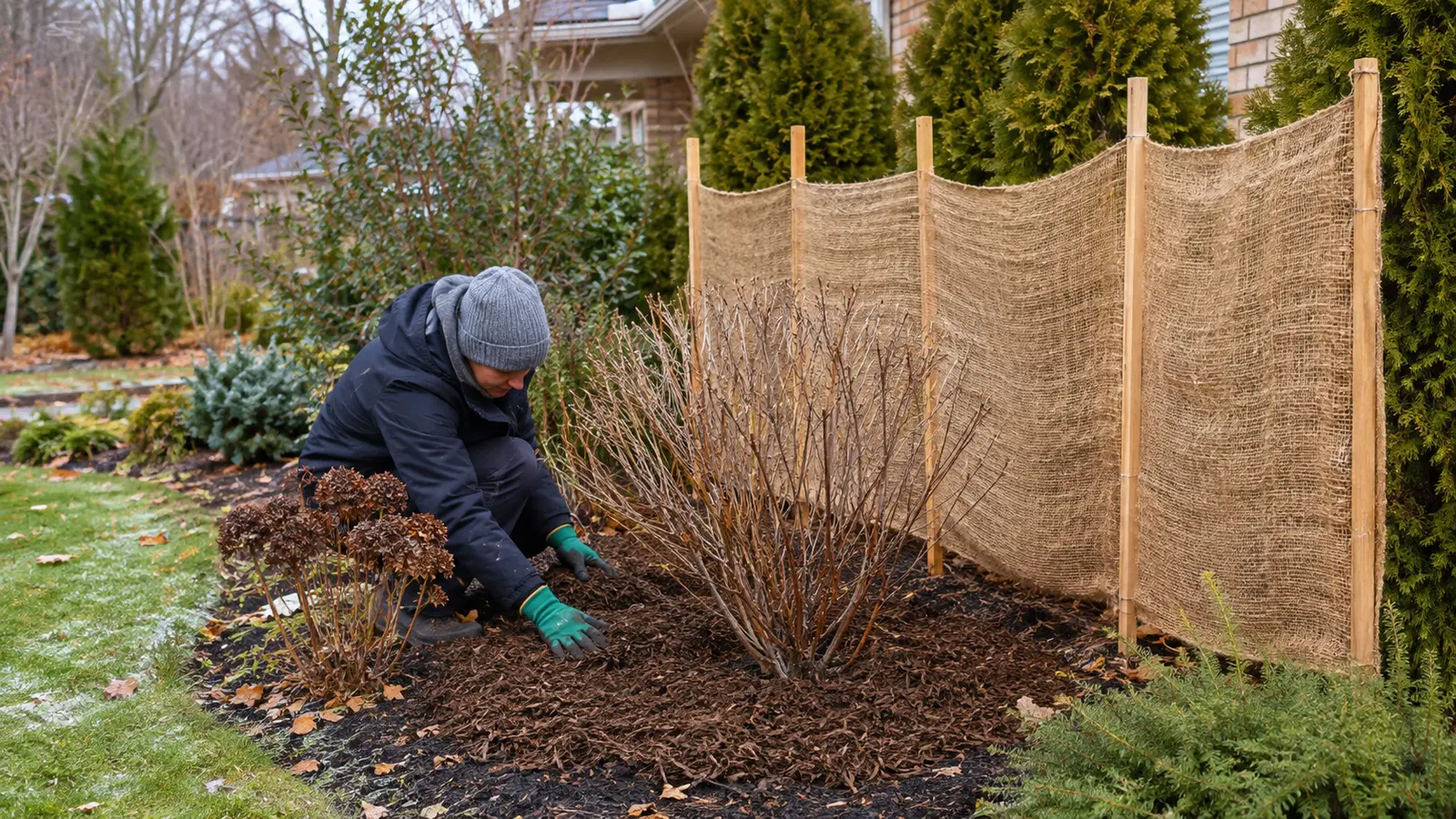
Prepare new shrubs for their first Ontario winter
Water during dry fall weather until the ground freezes. A modest mulch layer helps moderate soil temperature and moisture, but mulch should not cover stems or the plant crown.
Exposed evergreens and shrubs near salt spray may benefit from a breathable burlap screen on the windward or roadside side. Do not seal foliage in plastic or wrap branches so tightly that air cannot move.
Warning signs during the first year
Dry, curling, or crispy leaves
Check moisture inside the root ball and look for hot reflected areas or wind exposure.
Yellow leaves and constantly wet soil
Reduce watering and investigate drainage before roots lose more oxygen.
Shrub leaning after rain or wind
Straighten and stabilize it early, then confirm the root ball and soil are properly settled.
Mulch or soil against stems
Pull material back to expose the crown and reduce moisture related stem damage.
No new growth with spreading dieback
Review planting depth, roots, drainage, watering, salt, light, pests, and disease.
Animal or winter damage
Use an appropriate barrier and avoid treatments that trap moisture or damage bark.

Years two and three: protect the shape you planned
Healthy shrubs should begin filling their intended space while preserving airflow and access. Remove dead, damaged, rubbing, or badly placed growth, but prune according to the species and flowering cycle.
Continue watering during drought and monitor plants near hot walls, driveways, roads, downspouts, and roof lines. Those microclimates can remain stressful long after the rest of the garden is established.
Common mistakes to avoid
Watering only the surface
A quick spray can leave the centre of the root ball dry.
Following a rigid schedule
Weather, soil, drainage, season, species, and shrub size all change water demand.
Making a mulch volcano
Deep mulch against stems can hold moisture where it does not belong.
Fertilizing a stressed shrub
Fertilizer does not correct poor drainage, dry roots, excessive depth, or unsuitable light.
Pruning at the wrong time
Heavy pruning can remove flower buds or reduce the leaves needed for establishment.
Ignoring mature size
Crowded shrubs create long term pruning work and compete for light, water, and airflow.
Newly planted shrub care FAQ
How often should newly planted shrubs be watered?
Check the root ball daily during the first week and water when it begins to dry. During the following weeks, shift toward deeper watering based on soil moisture, weather, drainage, plant size, and species. A fixed schedule should never replace checking the soil.
How long does it take a new shrub to establish?
Establishment commonly continues through the first year and often into the second growing season. Larger shrubs, exposed sites, compacted soil, drought, and limited roots can extend the process.
Should I fertilize a shrub immediately after planting?
Do not automatically apply strong fertilizer at planting. Correct planting, water, soil, light, and mulch matter first. Use fertilizer only when the shrub requires it and a soil or plant assessment supports it.
Should new shrubs be pruned after planting?
Remove broken, dead, or clearly damaged branches, but avoid heavy shaping immediately after planting. The correct pruning time depends on the shrub species and whether it blooms on old or new wood.
Do newly planted shrubs need winter protection in Toronto?
Some do. Newly planted evergreens, broadleaf evergreens, exposed shrubs, and plants near roads may benefit from wind and salt protection. Use a breathable wind screen when needed rather than wrapping foliage tightly in plastic.
Let NorthCedar plant and care for your shrubs
NorthCedar supplies and installs shrubs across Toronto and the GTA. We can help choose plants for your light, soil, space, and privacy goals, prepare the planting area, install correctly, add mulch, and provide a practical care plan for your property.