
Ontario lawn establishment & care
How to Grow Grass in Ontario: Seed & Sod Guide
A practical guide to creating a healthy lawn with grass seed or sod—also called roll grass—and caring for it through Ontario’s heat, rain, frost, and winter.
Late Aug–mid-Sep
Best Ontario seeding window
Morning
Best time for routine watering
6–8 cm
Healthy established mowing height
Choose your starting method
Grass seed vs. sod in Ontario
Both methods can produce an excellent lawn. Your budget, timing, slope, and ability to maintain steady moisture should decide which is right for your property.
Growing grass from seed
Seed is the most economical choice and lets you match the blend to sun, shade, traffic, and soil. It needs a well-prepared seedbed, frequent light watering, and patience while different grass species germinate.
- • Lower material cost
- • More grass-blend choices
- • Best for fall or spring installation
- • More vulnerable to drying, washout, birds, and traffic
Starting with sod (roll grass)
Sod gives immediate green coverage and protects soil from erosion. It can be laid from spring through fall whenever soil is workable, but fresh rolls must be installed quickly and watered correctly.
- • Immediate finished appearance
- • Faster erosion and mud control
- • Shorter wait before normal use
- • Higher cost and labour during installation
Step-by-step installation
How to create your new lawn
Good soil preparation matters more than whether you choose seed or sod. Fix drainage and grading problems before the new lawn goes down.
Seed method
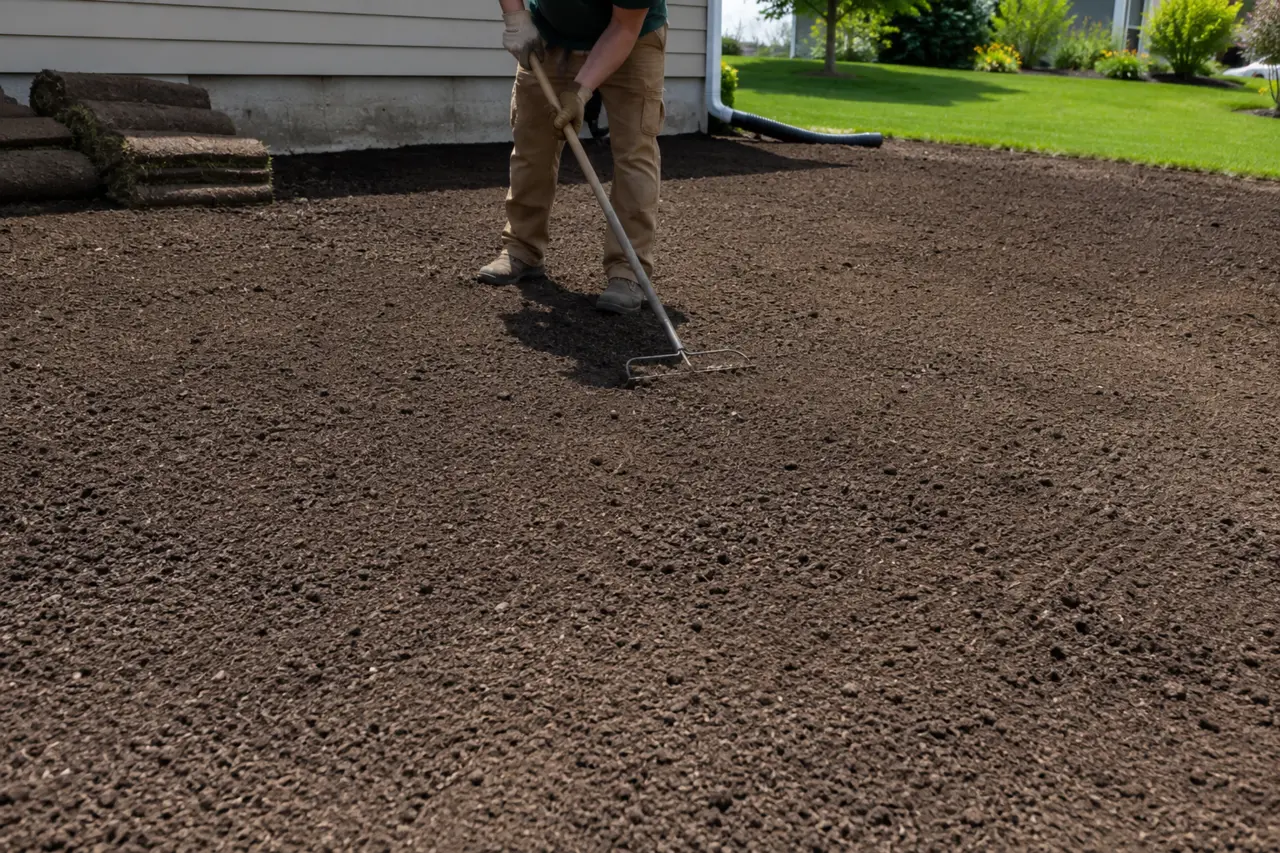
Prepare the soil
Remove debris and weeds, loosen compacted soil, and create a smooth grade that drains away from buildings. Add clean topsoil or compost where the soil is thin or poor.
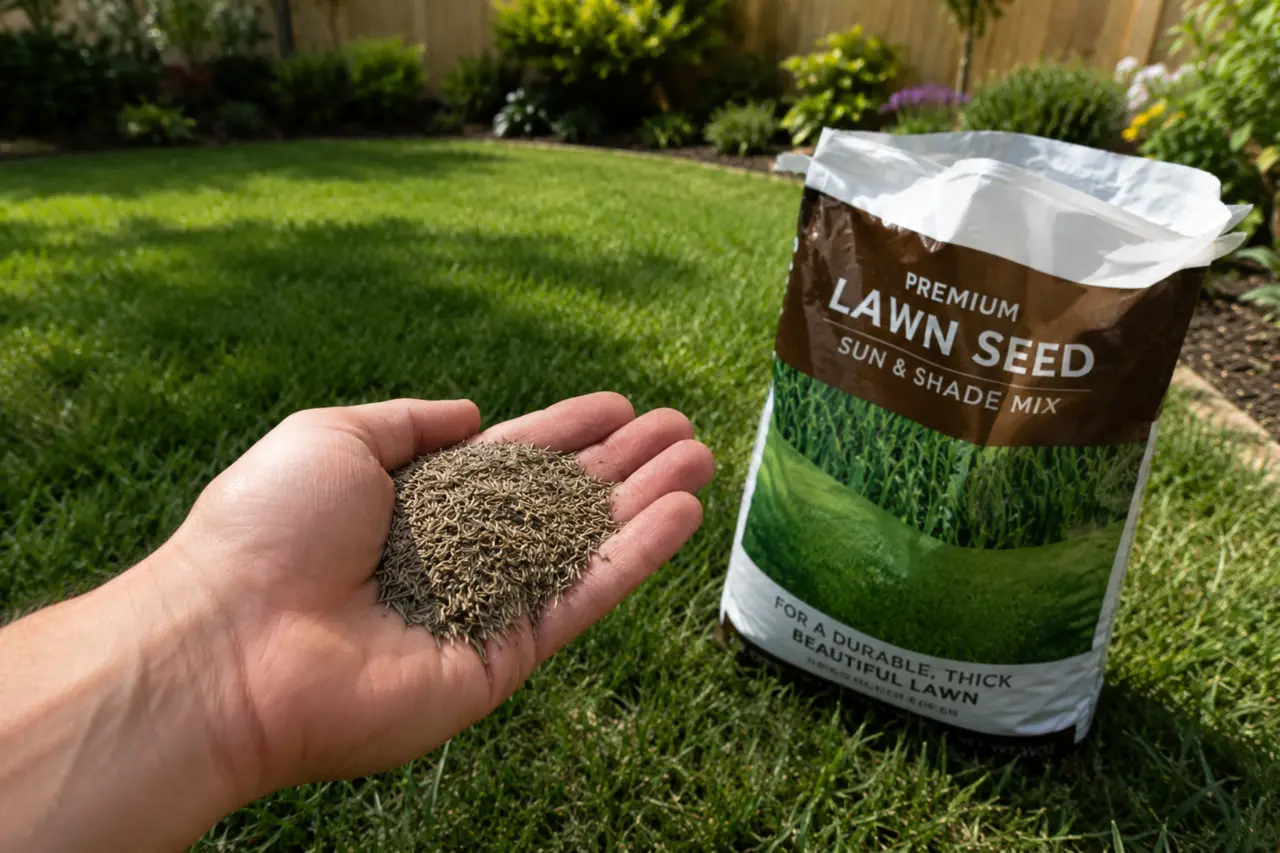
Choose an Ontario lawn mix
Use a cool-season blend suited to the site. Kentucky bluegrass adds density, perennial ryegrass establishes quickly, and fine or turf-type fescues improve shade or drought tolerance.
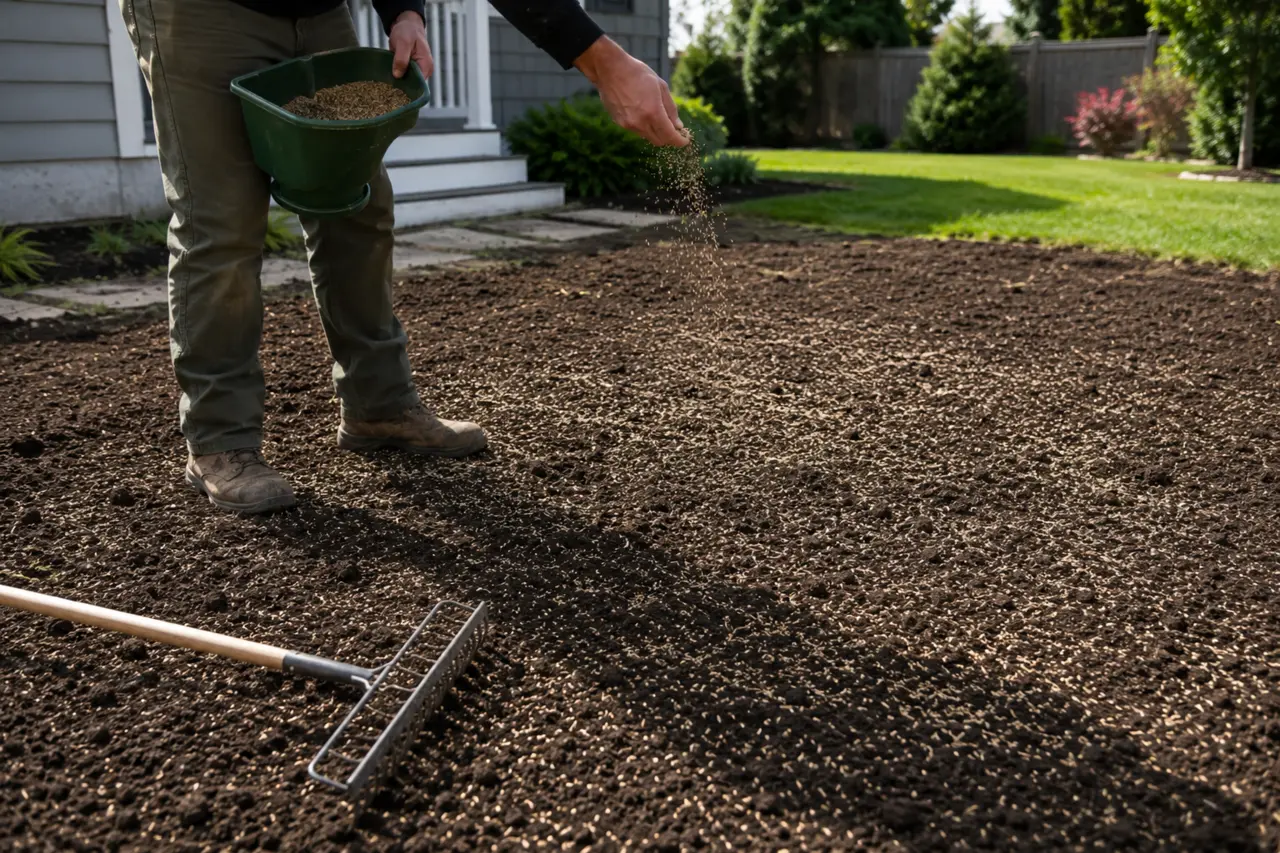
Spread seed evenly
Follow the package rate. Apply half in one direction and the other half at a right angle, then rake lightly so the seed makes firm contact with the soil.
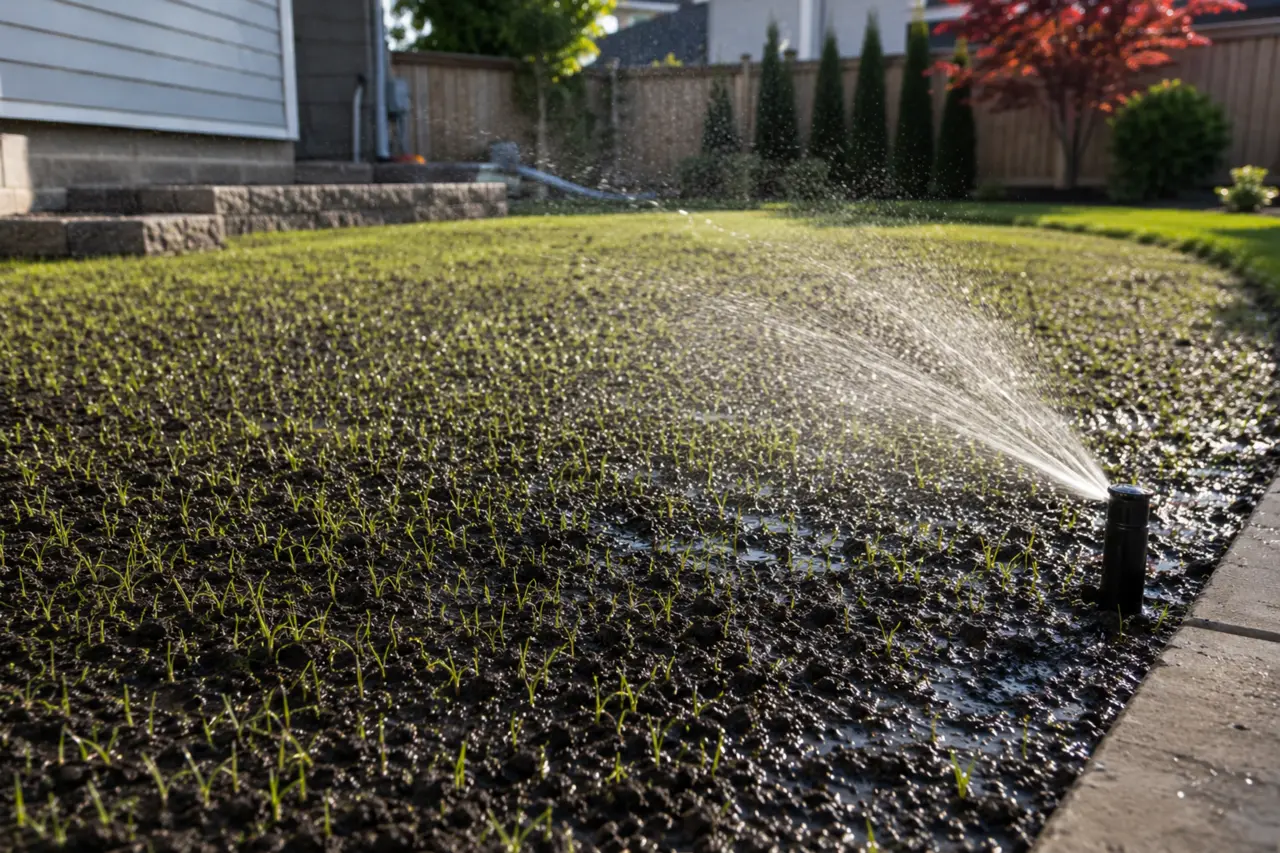
Keep the surface moist
Use short, gentle watering cycles so the upper soil stays consistently moist without puddles or runoff. Reduce frequency and water more deeply as roots develop.
Sod method
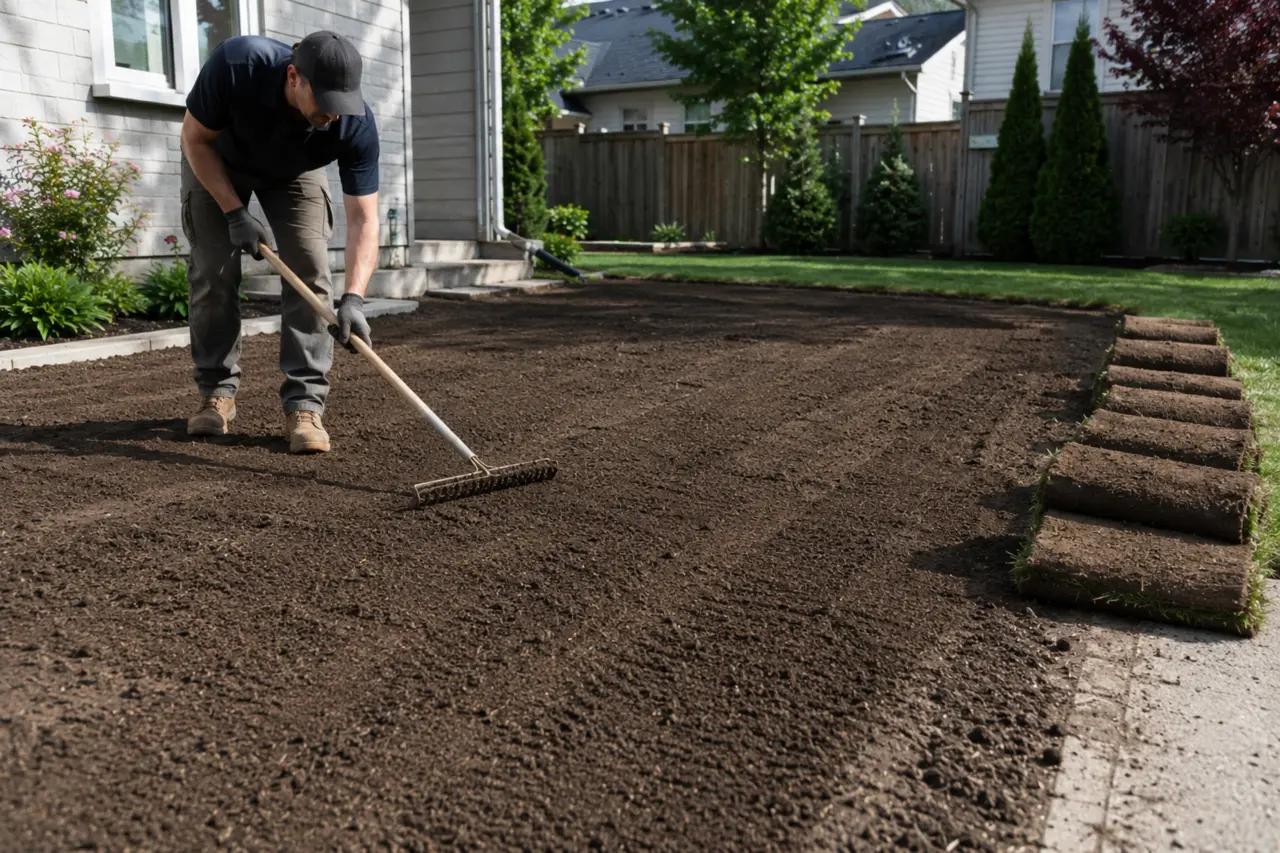
Prepare and level the base
Remove old turf and weeds, loosen the surface, correct low spots, and lightly firm the soil. The finished grade should sit slightly below patios and walkways.
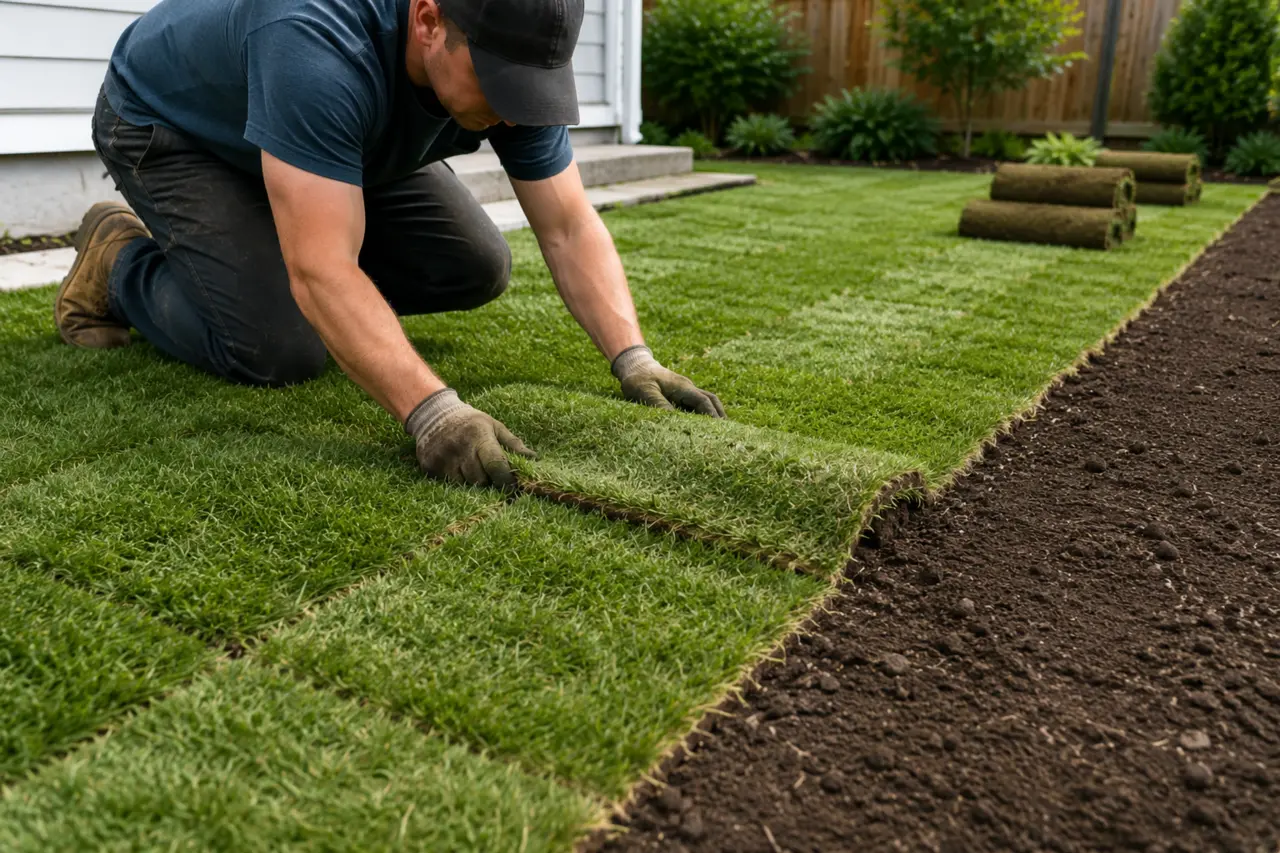
Install fresh rolls promptly
Lay sod as soon as possible after delivery. Start along a straight edge, stagger seams like bricks, and press edges together without stretching or overlapping them.
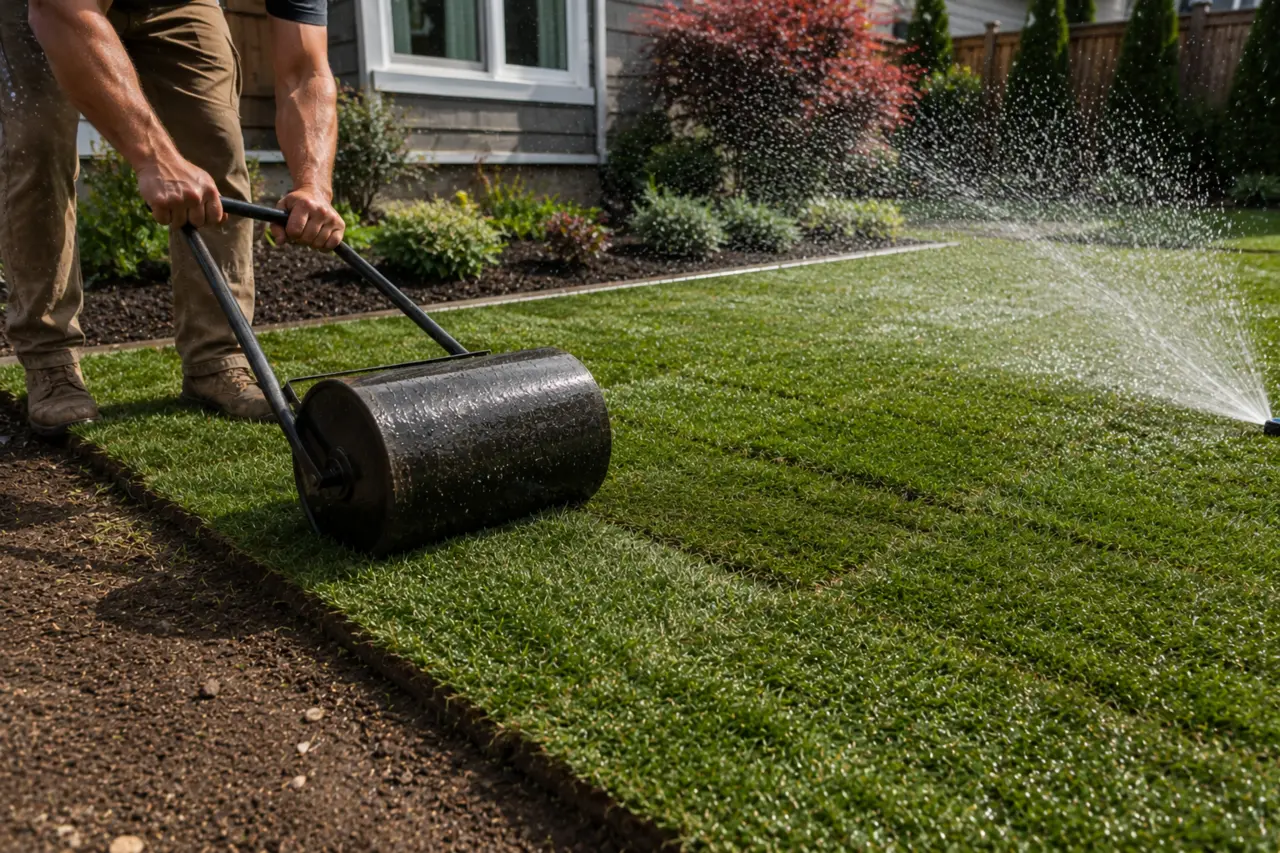
Roll and water immediately
Lightly roll the lawn to remove air pockets, then soak the sod and the soil beneath it. Check several areas to confirm water has moved through the full sod layer.
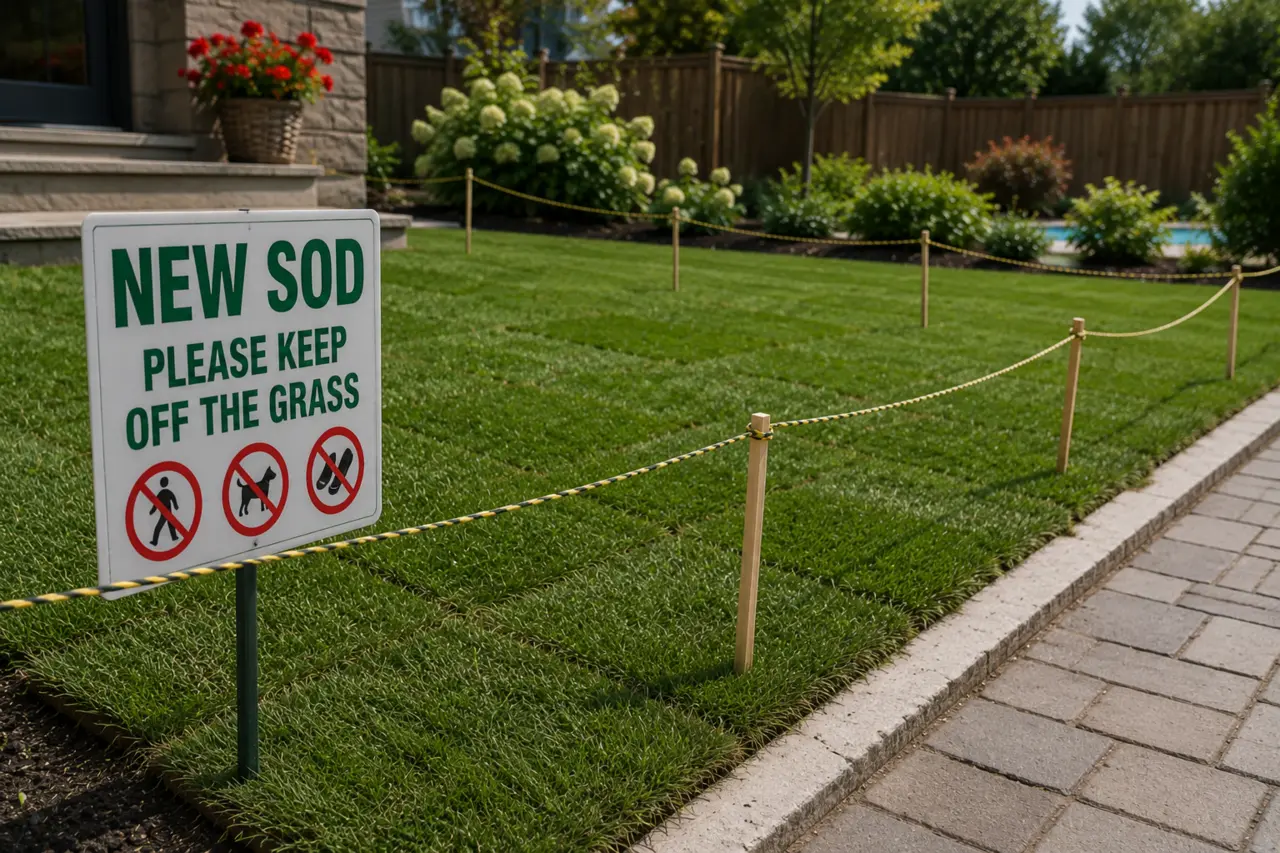
Protect it while roots form
Keep people and pets off the lawn as much as possible. After about 10–14 days, gently lift a corner; resistance usually means new roots are taking hold.
Short-term care
The first 30 days
These are starting points, not fixed rules. Check the soil every day and adjust for rain, temperature, wind, sun exposure, clay or sandy soil, and municipal watering restrictions.
Days 1–7
Grass seed
Keep the top 1–2 cm of soil evenly moist with light watering, often 2–4 short cycles on warm or windy days.
Sod / roll grass
Water immediately after installation, then keep the sod and soil underneath consistently moist. Check edges and sunny areas first.
Days 8–14
Grass seed
Continue light watering until most seed has germinated. Never let delicate new roots dry out or wash seed into piles.
Sod / roll grass
Begin reducing frequency as roots attach, but water deeply enough to moisten the soil below. Avoid constant saturation.
Weeks 3–4
Grass seed
Move toward fewer, deeper watering sessions. Mow only when most grass reaches about 8–10 cm and the soil is firm enough to walk on.
Sod / roll grass
Once rooted, transition toward deep watering every few days based on rain, heat, wind, soil type, and drainage.
After month 1
Grass seed
Treat the lawn as established only after several mowings. Continue limiting heavy traffic and repair thin areas during the next good seeding window.
Sod / roll grass
Use an established-lawn routine: deeper, less frequent morning watering and mowing at a height of approximately 6–8 cm.
Long-term Ontario lawn care
Care for your lawn through every season
Spring
Rake lightly after the soil dries, repair winter damage, topdress thin areas, and seed in mid-April to mid-May when conditions allow. Avoid working waterlogged soil.
Summer
Mow high, water in the morning, and avoid stressing the lawn during heat waves. Established lawns generally need about 2.5 cm of water per week, including rainfall.
Fall
Late August through mid-September is usually Ontario’s best seeding window. Aerate compacted soil, overseed thin areas, and continue mowing while grass is growing.
Winter
Keep heavy traffic off frozen or snow-covered turf when possible. Avoid piling salty snow on the lawn and plan spring repairs for damaged edges.
The healthy-lawn basics
• Mow at approximately 6–8 cm with a sharp blade.
• Remove no more than one-third of the blade at once.
• Water deeply in the morning once established.
• Count rainfall toward the lawn’s weekly water.
• Aerate compacted soil and overseed thin areas in fall.
• Use a soil test before choosing fertilizer.
Signs your new lawn is establishing
- • Seedlings are appearing evenly instead of only in puddled areas.
- • New sod resists a gentle lift because roots are attaching.
- • Soil is moist below the surface but not muddy or sour-smelling.
- • The grass stands back up after light pressure.
Problems to correct quickly
- • Seed or sod edges are drying, shrinking, or turning straw-coloured.
- • Water is pooling because the soil cannot absorb the irrigation rate.
- • Footprints remain in saturated soil or sod feels soft and spongy.
- • Heavy traffic, pets, or mower turns are shifting the new surface.
Ontario grass seed and sod FAQ
When is the best time to plant grass seed in Ontario?
Late August through mid-September is usually the best window because soil is warm, nights are cooler, and weed pressure is lower. Mid-April to mid-May is the second-best option when the soil is dry enough to prepare.
Is grass seed or sod better for a new Ontario lawn?
Seed costs less and offers more choices, but it needs careful watering and more time. Sod provides an immediate lawn and faster erosion control, but it costs more and still needs intensive watering while roots establish.
How often should I water new grass seed?
Keep the upper 1–2 cm of soil consistently moist with short, gentle cycles. That may mean 2–4 light waterings on a warm or windy day. After germination, gradually water less often and more deeply.
How often should new sod be watered?
Water immediately after installation and keep both the sod and the soil beneath it moist during the first week. As roots attach, reduce frequency and increase depth. Rainfall, temperature, wind, soil, and drainage should guide the exact schedule.
When can I mow a new lawn?
For seed, wait until most grass is approximately 8–10 cm tall. For sod, wait until it has rooted and the surface is firm enough for the mower. Use a sharp blade and remove no more than one-third of the grass height.
Can I install sod during an Ontario summer?
Yes, if the ground is workable and reliable irrigation is available, but hot, dry weather increases water demand and risk. Spring and early fall are easier. If sod is installed in summer, lay it promptly and monitor moisture closely.
Need help creating a healthy new lawn?
NorthCedar provides planting, soil replacement, landscaping, irrigation, and outdoor-care services across Toronto and the Greater Toronto Area.
Contact NorthCedar